2027 election will be best in Nigeria’s history, INEC chair assures
INEC
Says extensive testing will be conducted before 2027 to ensure seamless inter-state transmission of results
Emeka Agu with agency report
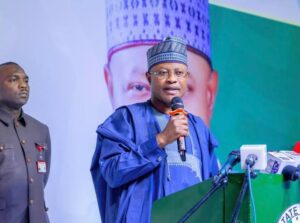
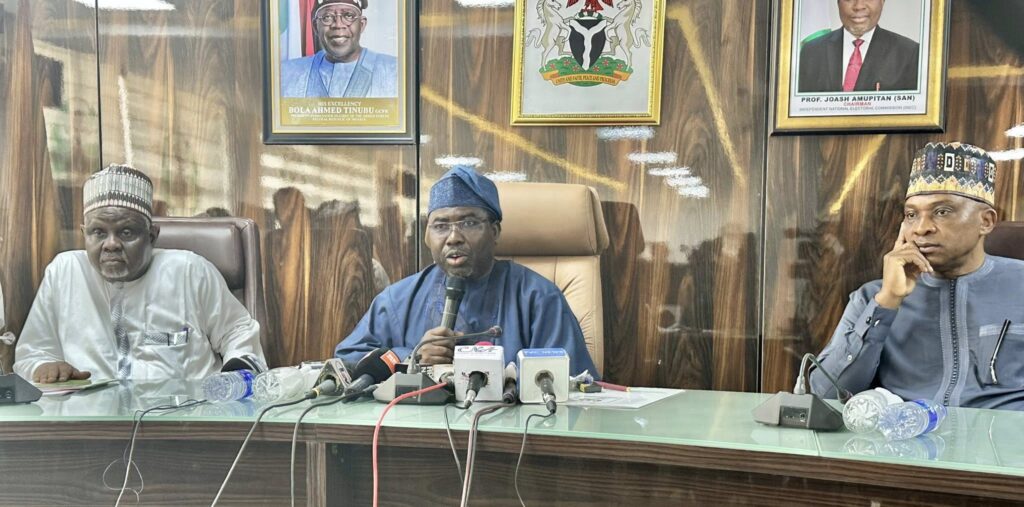
The Chairman of the Independent National Electoral Commission, Joash Amupitan, has assured Nigerians that the 2027 general election will be the best in Nigeria’s history, citing sweeping reforms introduced by the Electoral Act 2026.
Speaking at a Citizens’ Town Hall Meeting in Abuja themed “What It Means for Your Vote and the 2027 Elections,” organised by the Civil Society Network on Electoral Integrity, the INEC chairman described the new law as a major step toward restoring public trust, enhancing transparency, and strengthening democratic legitimacy.
“By the grace of God, the 2027 election will be the best Nigeria has ever had. The electorate of 2027 is more aware and understands the direct correlation between elections and national development.
“We want a process that guarantees the legitimacy and confidence people want to see in their system. When people trust INEC and their leaders, the country will move forward,” Amupitan said.
According to the INEC boss, the electoral body is putting in the needed work to ensure that next year’s polls are credible.
Addressing concerns over the technical issues that affected the 2023 presidential election results transmission, Amupitan assured Nigerians that lessons have been learned.
“Glitches have been eliminated. By God’s grace, they will not surface again,” he said, noting that while devices were tested in off-cycle state polls, they were not adequately stress-tested for nationwide transmission during the presidential election.
He disclosed that extensive testing will be conducted before 2027 to ensure seamless inter-state transmission of results.
Amupitan highlighted strengthened provisions for electronic transmission of results as one of the most significant features of the new law, revealing that INEC advocated for mandatory transmission during legislative consultations.
However, he cautioned against unrealistic expectations of real-time uploads, citing logistical and network challenges experienced even within the Federal Capital Territory. He recalled delays in result transmission from Kabir Ward in Kuje Area Council due to poor network connectivity and difficult terrain.
He compared the process to mobile banking transfers, explaining that while a transaction may be initiated instantly, confirmation may take longer due to network delays.
Despite these challenges, he assured that transmission capacity exists and will be strengthened ahead of the 2027 polls.
The INEC chairman emphasized that logistics remain the backbone of credible elections.
“Your election can only be as good as your logistics,” he said, outlining three key benchmarks for success: timely commencement, peaceful conduct, and transparent result management.
While acknowledging minor logistical lapses in recent FCT polls, he said corrective measures are already underway.
“What Nigerians desire is a perfect election. We will strive to deliver the best possible, even if perfection remains a work in progress,” he added.
Reflecting on Nigeria’s global image, Amupitan stressed that credible elections are closely tied to national development, investor confidence, and institutional strength.
“There is a correlation between credible elections and development. When people trust INEC and their leaders, the country moves forward,” he said.
Reaffirming his commitment, he concluded: “By the grace of God, the 2027 election will be the best Nigerians will have.”
He noted that voters are now more informed and demanding, and that the Electoral Act 2026 provides a stronger legal framework to meet those expectations.