2027 ELECTIONS: Controversy as schedule of poll clashes with Ramadan
INEC
* BVAS, IReV central to INEC’s operations, says Amupitan
*Election dates may change
BY ORIAKU IJELE
The dates announced for the 2027 general elections by INEC Chairman, Prof Joash Amupitan did not go down well with some stakeholders, especially Muslims in the North who have raised strong opposition to the dates, essentially because it would clash with the Ramadan exercise observed by Muslims.
Former Vice President Atiku Abubakar, has therefore call on INEC to promptly cancel the schedule to accommodate people like him. In his social media post, Atiku said, “The Independent National Electoral Commission (INEC) must urgently reconsider the February 20, 2027 date it has announced for the general elections. That date falls squarely within the Ramadan period (February 7 – March 8, 2027), a sacred season of fasting, reflection, and spiritual devotion for millions of Nigerian Muslims.
“Elections are not mere administrative rituals; they are national exercises that demand maximum participation, physical endurance, and collective focus. Fixing such a critical civic exercise in the middle of a major religious observance reflects poor judgment and a troubling lack of sensitivity to the nation’s socio-religious realities.
“In a diverse country like Nigeria, inclusive planning is not optional, it is fundamental. Something as basic as choosing a broadly acceptable date should not be mishandled. It speaks to competence, foresight, and respect for citizens.
“If INEC struggles with getting a simple matter of timing right, Nigerians are justified in asking: what assurance do we have that it will competently deliver free, fair, and credible elections in 2027?”
Meanwhile Amupitan has stressed that technology was at the heart of operations of INEC and should play a good role in the enxt general election.
He said that the Bimodal Voter Accreditation System (BVAS) and the INEC Result Viewing Portal (IReV) remained central to the commission’s operations, as mandated by the Electoral Act 2022.
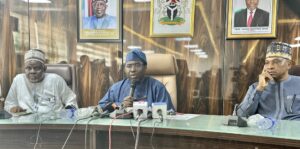
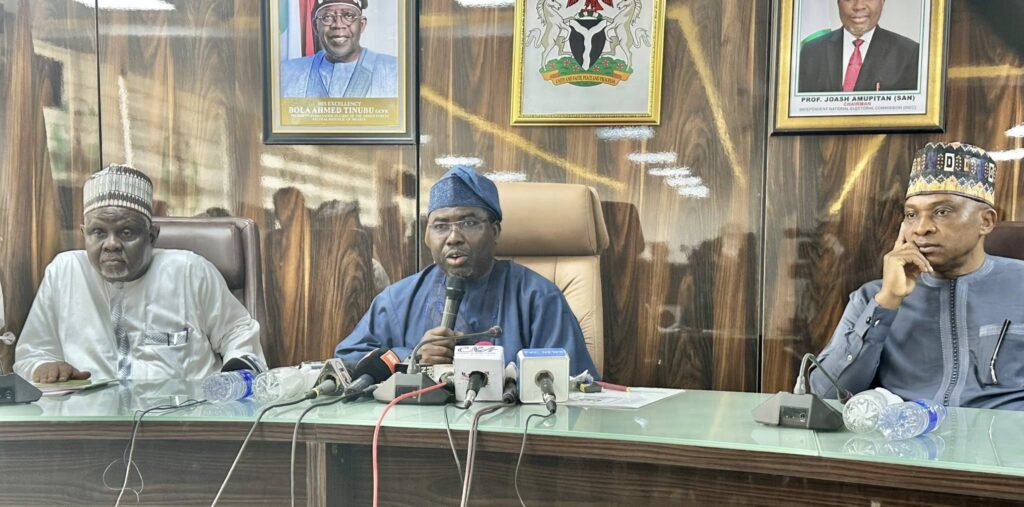
INEC Chairman, Prof. Joash Amupitan, gave the commitment at a news conference on the official release of the timetable and schedules of activities for the 2027 general elections on Friday in Abuja.
Amupitan also clarified that the election budget is N273 billion as against one trillion Naira being rumoured in some quarters.
He said that the Bimodal Voter Accreditation System (BVAS) and the INEC Result Viewing Portal (IReV) remained central to the commission’s operations, as mandated by the Electoral Act 2022.
On plans by the commission against possible glitches in the deployment of technology, Amupitan said that INEC was working tirelessly to improve its internal machinery.
“Nobody is being deceptive; we have built the IReV; we have improved on it and we are improving on our BVAS.
“The debate is going on, but no matter how it ends, we already have our own system to ensure that results are transmitted,” he said.
To restore trust, the INEC chairman said plans were on the way to conduct a mock presidential election to test the robustness of the technology before the next major election cycle.
He debunked claims that he had ruled out technology, noting that BVAS units were already being reconfigured and tested for upcoming election in the FCT.
On election budget, the INEC chairman highlighted the significant cost of conducting polls, particularly regarding ad-hoc staff, citing a resolution by the House of Representatives to increase allowances for NYSC members and the financial implications.
“We were at the National Assembly yesterday (Thursday). My attention was drawn to the resolution of the House of Representatives, that we should increase the amount that we pay to ad-hoc staff, NYSC members.
“By the time they work it out, it came to about N32 billion, because we’ll be using about 450,000 corps members, ” he said.
Unlike what happened in 2023, Amupitan said that INEC had doubled the amount to be paid to corps members and other ad hoc staff in 2027.
“In every polling unit, you also have four polling officials, the presiding officer, you have APO 1, APO 2 and APO 3.
“So by implication, by the time you are increasing the amount that you are doing for NYSC corps members, you also have to do for SPO, for APO 1, APO 2, APO 3. Now multiply 32 billion times four,’’ he said.
Amupitan also listed the cost of training, deployment of security, increase in inflation and foreign exchange among others as some of the factors responsible for increase in cost of elections budget.
Asked if it’s possible to conduct all elections in one day and eliminate off-cycle elections, Amupitan said that such a change would require a constitutional amendment.
He cited Sections 76 and Section 118 of the constitution, which mandate that elections must hold not later than 150 days before an incumbent’s tenure expires.
He explained that off-cycle elections were the “judicial consequences” of past tribunal rulings where governors were removed and their tenures restarted at different times.
Amupitan refuted the reports suggesting that he planned to build hospitals, saying the commission only requested funds for drugs and maintenance of the existing INEC clinics for staff welfare and not for construction of new medical facilities.
While unveiling the timetable for the election yesterday, INEC set February 20, 2027, as the date for the Presidential and National Assembly polls.
Addressing political party leaders, civil society organisations, and members of the press in Abuja on Friday, the INEC Chairman described the announcement as “a significant milestone in our democratic journey” and a constitutional obligation aimed at consolidating Nigeria’s democracy.
According to the Commission:
* Presidential & National Assembly Elections – February 20, 2027
* Governorship & State Houses of Assembly Elections – March 6, 2027
The elections will cover the offices of:
* President and Vice President of the Federal Republic of Nigeria
* Governors and Deputy Governors (except in Anambra, Bayelsa, Edo, Ekiti, Imo, Kogi, Ondo and Osun States)
* Members of the Senate
* Members of the House of Representatives
* Members of the State Houses of Assembly
Prof. Amupitan emphasized that the release of the Notice complies strictly with the provisions of the Constitution of the Federal Republic of Nigeria, 1999 (as amended) and Section 28(1) of the Electoral Act, 2022, which mandates publication not later than 360 days before the election date.
The INEC Chairman addressed recent speculation surrounding election dates, noting that some individuals had attempted to preempt the Commission by circulating unofficial schedules.
“For some time now, this has been a subject of speculation,” he said, adding that such actions were misleading and orchestrated by detractors. He reaffirmed that only INEC has the constitutional authority to fix election dates.
INEC is closely monitoring ongoing amendments to the Electoral Act, 2022, currently before the National Assembly. While welcoming reforms that could strengthen the electoral framework, the Commission stressed its obligation to operate within the existing law until any amendments are duly enacted.
“The timely announcement of the election date allows political parties, civil society organisations, and the electorate to prepare adequately,” Prof. Amupitan noted.
Under the approved timetable:
* Political party primaries must hold within the statutory period.
* Submission of nomination forms must comply strictly with the designated window.
* Campaigns will commence as provided by law and end 24 hours before Election Day.
The Chairman warned that the Commission would not hesitate to enforce compliance with electoral laws and timelines.
Reaffirming INEC’s independence and neutrality, Prof. Amupitan outlined key priorities for the 2027 polls, including:
* Expanded deployment of technology to enhance transparency;
* Continuous cleaning and updating of the National Register of Voters;
* Strengthened collaboration with security agencies to ensure peaceful elections;
* Increased voter education and stakeholder engagement.
He urged political parties to conduct peaceful primaries, avoid inflammatory rhetoric, and uphold internal democracy, while appealing to citizens to maintain peace throughout the electoral cycle.
Describing the 2027 General Elections as a collective national responsibility, the INEC Chairman called on government institutions, the media, security agencies, civil society groups, and Nigerians at large to play their roles in safeguarding the integrity of the process.
“As we commence this important national exercise, I assure Nigerians that the Commission is fully prepared and determined to deliver elections that reflect the sovereign will of the people,” he declared.