FCT POLLS Abuja DisCo postpones scheduled power outage on election day following citizens’ outrage
FCT Polls
*APC, ADC test wits, stakeholders laud BVAS upgrade
BY ORIAKU IJELE
All is set for the council elections in FCT with eyes on the All Progressives Congress and African Democratic Congress as they test the electoral waters ahead of the 2027 general elections.
The Daily Monitor learnt there had been fireworks all day as preparations heightened yesterday, the crescendo being the reaction of FCT residents when the Abuja Electricity Distribution Company, announced that there would be power outage during the elections raising suspicions of electoral sabotage, a move that attracted overt rage from residents. “Is that the style they want to use to rig the elections?” obviously dominated discussions, forcing AEDC with the persuasion of TCN and other stakeholders to postpone the scheduled maintenance that would have necessitated power outage.
In the meantime, the level of preparedness has elicited some cheers amongst stakeholder. Faith Nwadishi, the Executive Director, Centre for Transparency Advocacy (CTA), an election observer group, has welcomed recent improvements to the Bimodal Voter Accreditation System (BVAS) by the Independent National Electoral Commission (INEC).
According to her, the BVAS now has a critical new safeguard designed to protect the integrity of election results.
Nwadishi gave the commendation on Friday during a news conference on the Federal Capital Territory (FCT) Area Council Elections coming up on Saturday.
The FCT comprises six Area Councils—Abaji, Bwari, Gwagwalada, Kuje, Kwali, and Abuja Municipal Area Council (AMAC).
Nwadishi explained that the BVAS enhancement included an electronic upload verification feature for the form EC8A result sheet.
“Under the upgraded system, if the number of accredited voters recorded by BVAS does not match the figures entered on the result sheet, the platform will automatically reject the upload.”
Nwadishi added that a total of 3,095 BVAS machines have been deployed across the six area councils; 139 to Abaji, 553 to Bwari, 346 to Gwagwalada, 268 to Kuje, 207 to Kwali and 1,582 to AMAC.
“Additionally, four backup BVAS machines have been allocated to each of the 62 wards, amounting to 248 backup devices. Registration Area Technicians are on standby to promptly replace any faulty machines,” she said.
The executive director noted that across the territory, there are 62 wards—also known as Registration Areas—and 2,822 polling units scheduled for the election.
She, however, said that elections would not take place in four polling units due to the absence of registered voters.
“Three of the affected polling units are located in Garki, while one is in another area yet to be confirmed.”
She said that the situation, partly linked to INEC’s earlier decentralisation of polling units aimed at decongesting voting centres and bringing them mcloser to voters’ residences.
The executive director added that the total number of registered voters stands at 1,680,316; of this figure, women account for 45.85 per cent, while men make up 54.15 per cent.
Nwadishi said that this indicated a higher number of male registrants, noting that AMAC alone has 841,587 registered voters—almost 50 per cent of the total voter population in the FCT.
She further said that the demographic data further showed that the largest voting bloc falls within the 36 to 49 age bracket, with 541,889 registered voters classified as youths across the FCT.
The executive director emphasised that this age group could significantly influence the outcome of the election, warning that low turnout among them could affect overall participation and credibility.
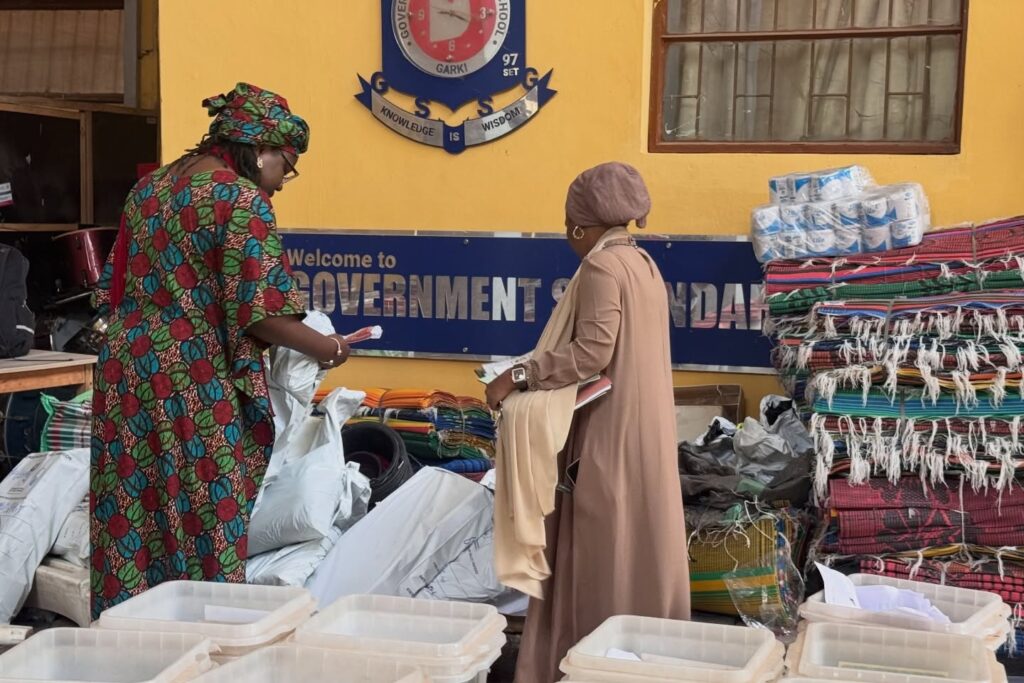
She commended INEC for its level of preparedness, noting the observed movement of sensitive materials from the Central Bank to various area councils and planned monitoring visits to Registration Area Centres (RACs).
On the application of the new Electoral Act 2026, she questioned whether the election would be conducted under the repealed Electoral Act 2022 or the newly enacted 2026 law.
She said that immediate clarification is crucial for political stakeholders and citizens alike to ensure legal certainty and avoid post-election disputes.
Similarly, Funmilayo Babatunde, Programme Executive, Representation and Governance at Dataphyte Foundation, said the foundation would ensure proper documentation of incidents and the electoral process as they occur in the field.
“We will leverage the various examples and experiences shared across different areas. For us, evidence is key.
“This election is particularly critical as we prepare for the 2027 general elections.
We need credible evidence to advise the government on what is working, what needs adjustment, and what should be improved ahead of 2027.
“This also applies to upcoming off-cycle elections, including those in Ekiti and Osun. Our focus is on gathering comprehensive reports and making them accessible,” Babatunde said.