Power outages: Adelabu apologises, promises improvement in 2 weeks
Attributes challenge to shortage of gas supply to power plants
Ikeja Electric blames Lagos power outages on drop in generation
NSE president seeks holistic approach to challenges in Power sector
Emeka Agu Jnr with agency reports
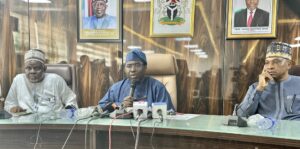
The Minister of Power, Mr Adebayo Adelabu, on Tuesday, apologised to Nigerians for the current epileptic power situation in the country, assuring that power supply would improve within two weeks.
Adelabu gave the assurance while briefing newsmen in Abuja on the state of the power sector since he assumed office in October 2023.
“With the committee we have set up, the feedback from gas suppliers, and the timeline for repairing the gas pipelines, I can say that within two weeks we should start seeing improvements in power supply.
“Once the gas line repairs, particularly the one from Seplat, are completed and the committee ensures that gas companies meet their domestic supply obligations to power plants, timely payments will encourage gas suppliers and lead to improved power supply in the country,” he said.
Adelabu also appealed to Nigerians for patience regarding the temporary challenges currently being experienced in the power sector, adding that the ministry was doing everything possible to address the issue.
“We want to apologise to Nigerians for this temporary problem, which is causing hardship, especially during this dry season when the heat is intense and businesses, schools, and homes are being affected,” he said.
He attributed the challenge to a shortage of gas supply to power plants, noting that 75 per cent of power plants relied on gas.
According to him, 25 per cent of power generation comes from hydro, and without gas supply, generation companies are unable to operate, leaving turbines idle.
“It is not our wish to find ourselves in this situation, but there are factors beyond our control.
” We are not relenting. We are working around the clock to return to the trajectory we achieved in 2025, when we were commended for a job well done.
“If we were able to provide such service in 2025, then in 2026, we are determined to do even more and do better,” he said.
The minister added that in the coming weeks, power generation would improve, with a target of 6,000 megawatts of electricity expected before the end of 2026.
Adelabu also revealed that the sector had recorded over three billion dollars in private sector investments over the past two years.
According to him, the sector also has a comprehensive, integrated policy on electricity, accompanied by a strategic implementation framework to guide every stakeholder and actor in the sector.
“Whether it is the government, sub-national entities, or the private sector, both local and international, there is now a document they can refer to.
“This document clearly outlines what is expected of each player, their responsibilities, and their limitations,” he said.
Meanwhile, Ikeja Electric on Tuesday said businesses and residents across Lagos are experiencing low electricity supply following a nationwide drop in power generation.
In a statement by the company’s Head of Corporate Communications, Kingsley Okotie, the company attributed the development to insufficient gas supply to thermal power plants, the country’s major source of electricity generation.
He noted that the shortfall had affected electricity distribution to customers, resulting in intermittent outages and load shedding across its network.
Okotie, however, assured customers of the company’s commitment to equitable and efficient distribution of the limited power available.
“The ongoing reduction in electricity supply is largely due to a nationwide drop in power generation, caused by limited gas supply to thermal power plants.
“This has significantly reduced the energy available on the national grid and, consequently, the allocation to Ikeja Electric and other distribution companies,” he said.
“The management regrets the inconvenience caused and appreciates the patience and understanding of our customers during this period.
“We remain committed to distributing the available power as efficiently and equitably as possible,” he said.
He urged customers to remain patient as efforts continued at the national level to improve gas supply and stabilise power generation.
The update followed worsening electricity supply in Lagos, with residents and businesses lamenting poor supply.
However, the President of the Nigerian Society of Engineers (NSE), Mr Ali Rabiu, has said that addressing the challenges in the power sector requires a holistic approach.
Rabiu made the remark while speaking at a webinar organised by the NSE Board of Fellows on Tuesday.
He said the approach requires innovation, collaboration and visionary leadership.
The theme of the webinar was “Rebooting Nigeria’s Power Sector for Sustainable Development: The Role of Nigerian Engineers.”
Rabiu attributed the decline in the power sector to long-standing political interference.
According to him, the politics of energy encompasses a myriad of complex issues,including policy formulation, regulation, investment and international relations.
“It is intertwined with socioeconomic dynamics, environmental considerations and geopolitical realities.
“Therefore, addressing the challenges within our energy sector requires a holistic approach that embraces innovation, collaboration and visionary leadership,” he said.
Rabiu commended the board for its steadfast resolve in bringing critical issues to the forefront.
He said that the webinar would foster meaningful discourse and strengthen the collective role of engineers in national development.
“The topic of this webinar addresses one of our country’s most pressing challenges — power, the backbone of industrialisation and a catalyst for growth across all vital sectors.
“As engineers, we are committed to guiding the Federal Government in properly constituting the management structure of all relevant agencies and operationalising the sector.
“We will also support policies that ensure reliable electricity supply, recognising that national development depends on it,” he said.
The guest speaker, Dr Meyen Etukudo, Special Adviser to the Akwa Ibom Governor on Energy, said the power sector faces significant challenges, particularly due to heavy reliance on thermal generation, which is both polluting and unsustainable.
Etukudo emphasised the need for a balanced power generation mix that incorporates clean and renewable energy sources.
He noted that Nigeria’s current energy mix is skewed towards thermal generation, with most power plants running on gas, leading to environmental degradation, health challenges and economic losses.
He advocated increased investment in renewable energy sources such as solar, wind and hydropower to reduce dependence on thermal generation.
Etukudo observed that Nigeria’s abundant sunlight and tropical climate make solar energy a viable option.
“Nigerian engineers must seize this opportunity to drive innovation and capacity building,” he said.
He also expressed concern that Nigerian engineers had been relegated to the background in the sector, with artisans and foreign experts handling critical projects.
Etukudo urged engineers to take a more proactive role in policy advisory, innovation and project management.
He stressed the need for engineers to lead project teams, collaborate with international experts and develop local solutions to build capacity and reduce dependence on foreign expertise.
Etukudo questioned why no seasoned power engineer had been appointed Minister of Power since independence.
“The problems in the power sector are not only technical but also political.
“Nigerian engineers must participate in elective politics and influence policy decisions to drive meaningful change.
“They must also be actively involved in regulation and governance to ensure energy efficiency and effective demand management,” he said.
He added that engineers have a critical role to play in rebooting Nigeria’s power sector and must adopt a proactive approach to drive innovation, build capacity and influence policy decisions for sustainable development and energy security.
The programme also featured a keynote address by the host, Chairman of the NSE Board of Fellows, Kamila Maliki, who spoke on the role engineers can play in revitalising the power sector.