1999 Constitution favours North, undermines Nigeria’s stability — Okurounmu
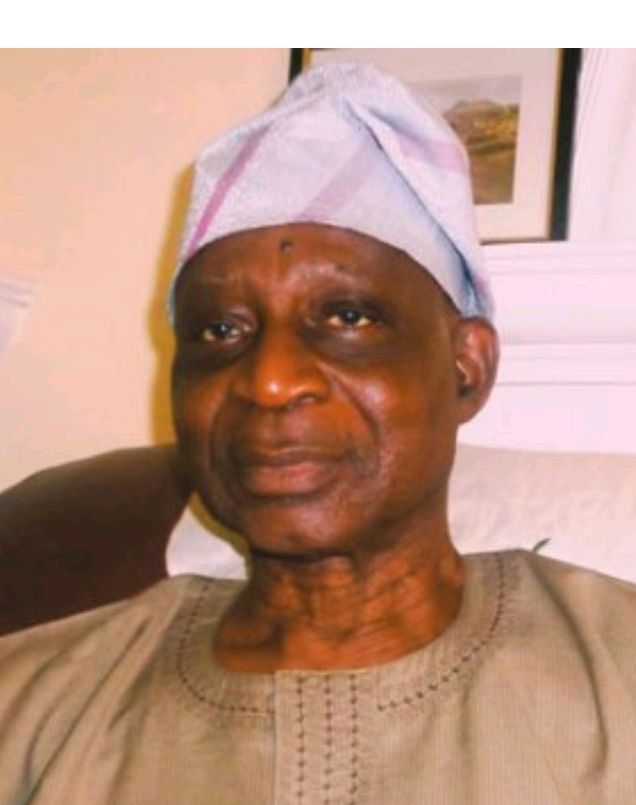
Femi Okurounmu
Abiodun Taiwo, Abeokuta
A former senator who represented Ogun Central Senatorial District, Femi Okurounmu, has alleged that Nigeria’s 1999 Constitution structurally favours the northern region, warning that the imbalance continues to shape governance outcomes and deepen political and economic challenges.
Speaking during an interview on Frontline, a current affairs programme on Eagle 102.5 FM in Ilese-Ijebu, Ogun State, Okurounmu examined the link between democratic governance and economic policy, raising concerns about the foundation of Nigeria’s democracy.
According to him, unless these structural issues are addressed, national development efforts may continue to face setbacks.
He argued that the current constitutional framework has created an uneven distribution of political power, influencing decision-making at the highest levels.
“The 1999 Constitution has more or less tilted all the structures of governance in favour of the North… whoever is president does not matter; the structure still controls governance,” he said.
Okurounmu described the 1999 Constitution as lacking democratic legitimacy, insisting it was imposed by the military rather than developed through popular participation.
He traced its origin to the regime of Sani Abacha, claiming the document was not made public until after elections had been conducted.
“It was essentially a decree turned into a constitution… even the incoming president was not fully aware of the document before assuming office,” he stated.
He added that many provisions mirror those in the 1979 Constitution, which he said was shaped during the administrations of Murtala Muhammed and Olusegun Obasanjo, and also contained structural imbalances.
The former lawmaker argued that the North’s higher number of states and local government areas translates into greater representation in the National Assembly.
According to him, this results in stronger influence in both the Senate and the House of Representatives.
“The North has advantages in the number of states and local governments… which means overwhelming influence in lawmaking,” he said.
He warned that such dominance could fuel marginalisation and dissatisfaction among other regions.
Okurounmu also lamented the failure to implement recommendations from the 2014 National Conference, which he said could have improved governance and fairness.
“Those recommendations have remained largely unimplemented despite their potential benefits,” he noted.
He maintained that the structure of governance limits the effectiveness of elected leaders, including Bola Ahmed Tinubu.
According to him, systemic constraints—not individuals—largely determine governance outcomes.
On insecurity, Okurounmu linked Nigeria’s security challenges to deeper systemic problems.
He argued that lasting peace cannot be achieved without addressing the underlying political framework.
The elder statesman warned that Nigeria risks becoming increasingly unstable if structural issues remain unresolved.
He called for an inclusive national dialogue involving all ethnic nationalities to determine a sustainable and equitable future.
“We need a sincere conversation on a framework that ensures peace, fairness, and mutual respect,” he said.