FG backs Lagos–Abidjan mega highway, seeks regional consensus on funding
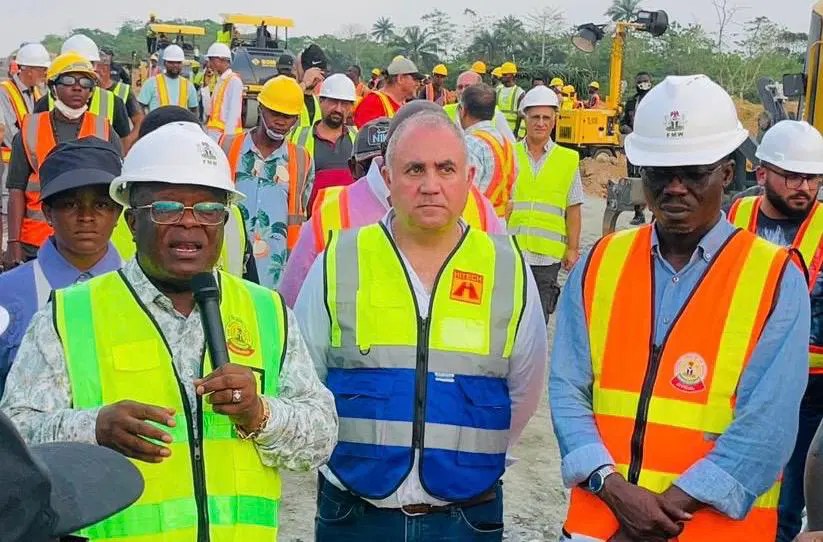
Dave Umahi
BY CHIJIOKE SIMON, ABAKALIKI
The Federal Government has restated its commitment to delivering the 1,028-kilometre Lagos–Abidjan Corridor, a flagship regional highway project aimed at boosting trade and strengthening connectivity across West Africa.
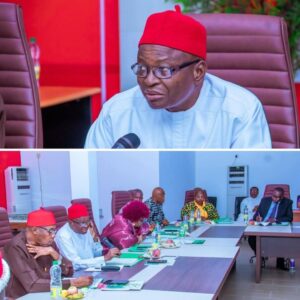
The assurance was given by the Minister of Works, David Umahi, during a high-level meeting with delegations from the ECOWAS Commission and the African Development Bank in Abuja.
Umahi, who chairs the project’s Steering Committee, conveyed the backing of President Bola Ahmed Tinubu, stressing that infrastructure development remains a key pillar of the administration’s agenda.
The Lagos–Abidjan Corridor, stretching across Côte d’Ivoire, Ghana, Togo, Benin, and Nigeria, is expected to significantly enhance regional integration and economic activities. According to the minister, the highway will be constructed using reinforced concrete technology, with three lanes on each carriageway to ensure durability and efficiency.
He noted that the project aligns with Nigeria’s broader infrastructure drive, including the Sokoto–Badagry Superhighway and the Lagos–Calabar Coastal Highway, both designed to improve connectivity within and beyond the country.
Providing updates, Umahi disclosed that several highway projects nationwide are progressing, with sections of the Lagos–Calabar Coastal Highway already completed and others nearing delivery.
However, he identified critical challenges affecting the Lagos–Abidjan project, particularly disagreements over design specifications and the uneven allocation of the corridor length among participating countries.
“There are still unresolved engineering issues, especially regarding the design and sharing of the corridor length. These matters may require decisions at the level of heads of state,” he said.
The minister revealed that Nigeria’s portion of the corridor, estimated at about 79.5 kilometres, would be built to higher standards than initially proposed. He added that the country is developing an alternative design model that reflects local realities and infrastructure needs.
Umahi explained that the revised framework, expected within weeks, would address practical concerns such as existing road networks and environmental factors along the route.
He further stressed that agreement on funding arrangements by member states is crucial before the project can proceed to procurement and full financing.
“Once the design is approved, the funding model must be settled at the highest level. Without that, moving forward with procurement would be premature,” he stated.
Earlier, the ECOWAS Director of Transport, Chris Appiah, said the visit formed part of ongoing consultations with member states to harmonize technical inputs and finalize outstanding issues.
Also speaking, the African Development Bank delegation, led by Salawou Mike Moukaila, described the corridor as a priority initiative, noting that efforts are underway to mobilize resources and develop a sustainable financing structure.
Moukaila disclosed that the project has attracted strong interest from international partners and co-financiers, emphasizing Nigeria’s strategic importance due to its central role in regional trade.
He commended the Federal Government’s infrastructure agenda, describing the Lagos–Abidjan Corridor as a transformative project capable of driving economic growth and integration across West Africa.
The Federal Government reiterated its readiness to work with regional partners to address outstanding concerns and ensure the successful execution of the project.