Nigerians alter diets, cooking method over gas price hike
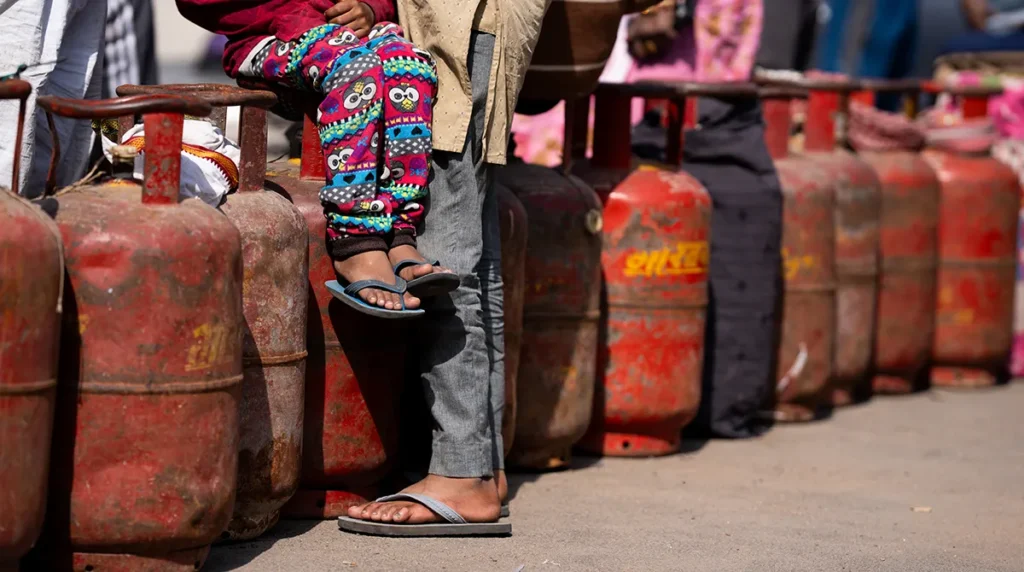
Cooking gas
BY ORIAKU IJELE (With agency reports)
With cooking gas selling above an unprecedented N2000 per kilogramme, Nigerian families are bracing, albeit tightly, to find a middle ground in the whole unfolding predicament.
The Daily Monitor on Saturday gathered that cooking of items that take long has been drastically reduced unless it is very necessary. To this end, food items like beans, boiling of tomatoes and meat which obviously require more gas are now done with pressure pots for average families, while the poor ones have resorted to charcoal.
A female trader at Obosi Anambra state, identified as Ijeoma Okeke, told our correspondent that housewives have been forced to innovate or crumble. “For me living at Obosi which is a semi urban centre, is not easy. We are completely excluded from firewood, and gas is N2200 here, while kerosene is N4000. Electricity is expensive and not even available, making it very complex. Many families shuffle between gas and electricity when it is available. Because of the price of gas, a friend of mine does not cook her blended tomatoes to dry again. What she does is to seive it with a clothe to get the paste, to help reduce the cooking time and help in reducing the gas required. We are reallyu suffering. Tell government to help us. Gas is abundant in Nigeria, so why can’t we get it cheap?”
Meanwhile, some Nigerian in Ibadan have expressed concern about the rising cooking gas cost, saying it strains household budgets and forces families to alter their diets and cooking methods.
The residents, speaking separately with the News Agency of Nigeria (NAN) in Ibadan on Friday, unanimously said the situation has affected their feeding patterns and overall standard of living.
They equally called on all relevant authorities to look into the matter.
A federal civil servant, Mrs Olawumi Ajiboye, described the significant increase in the cost of refilling a 12.5 kg gas cylinder as alarming.
She said many households now rely on alternative cooking methods to meet their daily needs.
“The quantity of gas purchased no longer lasts as long as it used to, compelling my family to reduce cooking frequency and supplement gas usage with alternative appliances such as the electric hot plate,” Ajiboye said.
Similarly, a multimedia content creator, Mr Francis Oshomah, said the increase has disrupted his family budget, forcing him to buy lower quantities.
According to him, he also has to ration usage to accommodate other essential expenses.
A civil servant, Mr Timothy Aiyepola, said the situation has become a major challenge for many households.
According to him, families now review their meal plans and reduce the frequency of preparing certain foods that require a longer cooking period.
Aiyepola said, “My family, which previously consumed beans at least twice weekly, has reduced it to once a week due to the cost implications.”
He added that poor electricity supply further compounded the challenge, as families could not conveniently cook large quantities of food to be preserved in freezers.
Another respondent, a state civil servant, Mr Gbenga Awe, said he had resorted to buying smaller quantities of gas daily.
Awe said that retailers now sell cooking gas at between N2,000 and N2,500 per kilogramme, depending on the location and circumstances.
According to him, the development has increased the financial burden on households, especially those with large families and frequent cooking needs.
A technology expert, Mr Akinola Akinyemi, said he filled his 12.5 kg cylinder in March between N11,000 and N13,000, but was surprised to find it now costs N21,000.
“It was very unexpected, forcing me to reduce the quantity I was to buy.
“I now augment by using an electric burner to cook, and that means my electricity bill has doubled, because I am on prepaid meter mode.
“This is quite a challenge for every family at this time. We are all feeling the hit this increase has caused,” Akinyemi said.
Another federal civil servant, Ms Victoria Awolade, said that cooking gas was fast getting out of the reach of the common man.
“Some households are going back to the use of charcoal to survive. We are supposed to have gas as a by-product; I don’t understand why it is expensive.
“Everything still goes back to the table of the government because the suffering is becoming more and more unbearable for Nigerians, which ought not to be.
“It is becoming more obvious that some people are gaining from the pain of the masses.
“The people have to ration the number of times they cook; some, once a day or once in two days, if possible.
“It is sad, and we don’t know how long this will continue,” Awolade said.