Onaiyekan lists seven electoral reforms ahead of 2027
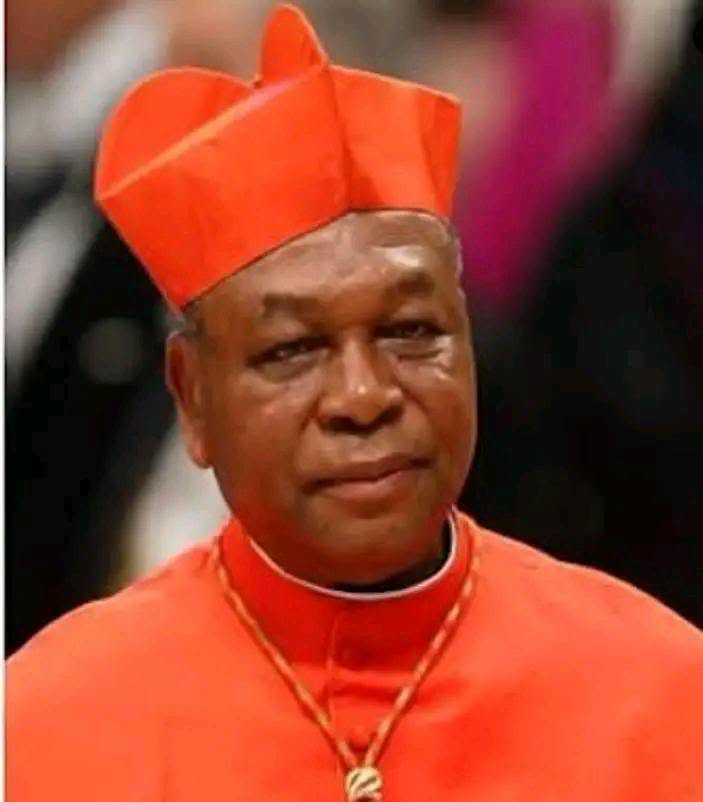
Archbishop David Onaiyekan
.Says winners of elections should be determined at the polls, not by judiciary
Archbishop Emeritus of Abuja, John Cardinal Onaiyekan, has proposed seven areas of reform for consideration by the National Assembly to strengthen Nigeria’s electoral system.
Onaiyekan made the proposal on Thursday while delivering the keynote address at the 22nd All Nigeria Editors Conference, ANEC 2026, organised by the Nigerian Guild of Editors in Enugu.
The conference, which brings together more than 500 editors and other stakeholders, is themed, “The Ballot, the Media and the Task of Keeping Democracy Alive,” with a sub-theme focused on detecting and debunking artificial intelligence-driven disinformation before, during and after elections.
The Cardinal said Nigeria needed to work towards a democracy that respected the wishes of citizens and ensured that government served the common good.
He said although democracy was the preferred form of government in contemporary times, its success depended on adherence to its rules, checks and balances.
According to him, “the ultimate objective is to install a government that is freely chosen by the people and that works for the common good of the people.”
Onaiyekan, who described himself as an 82-year-old Nigerian who had witnessed the country’s “hopes of greatness” repeatedly elude it, said he was speaking at the conference both as a citizen and religious leader.
One of the seven areas of reform for consideration by the National Assembly to strengthen Nigeria’s electoral system, according to the Cardinal, is the process for appointing the INEC chairman and commissioners.
According to him, the process for appointing the INEC chairman and commissioners should be reviewed because the electoral body should not be dependent on the President or state governors, who are themselves contestants or politically involved in elections.
He also called for a special election tribunal dedicated exclusively to electoral disputes, with a strict time-frame for concluding cases.
Onaiyekan proposed that the burden of proving the validity of an election should, in appropriate cases, be placed on INEC where its conduct is challenged.
He further called for citizens who cast votes to be given legal standing to challenge election results, arguing that voters should not be excluded from the judicial process where they believe their votes were not properly counted.
“While the candidates have a right to complain in the tribunal, we too should have the right to present our case if we believe that the votes we cast have not been properly counted,” he said.
The Cardinal also advocated that all major election petitions should be concluded before elected candidates are sworn into office.
He argued that allowing a candidate already sworn into office to use state resources while defending an election victory in court created concerns about fairness.
Onaiyekan also called for the introduction of independent candidates, particularly for local government elections, arguing that communities should be able to elect credible candidates without requiring them to belong to political parties.
He said this would help curb what he described as “the tyranny of the political parties and their ruthless godfathers.”
The Archbishop Emeritus further proposed a two-round presidential election system, with a candidate required to secure at least 50 per cent of votes cast to win outright.
He said where no candidate attained the threshold, the two leading candidates should contest a second round.
Onaiyekan also called for stricter rules on lawmakers who cross-carpet from the political parties on whose platforms they were elected.
He proposed that such lawmakers should return to their constituencies to seek fresh mandates under their new parties.
Onaiyekan criticised what he described as the “do-or-die” approach of politicians to elections, saying many viewed contests primarily as struggles for power, wealth and influence.
He said ordinary citizens were often reduced to “pawns” in the political process.
He also questioned the independence of INEC, arguing that the commission faced a structural challenge because it was established and funded by government, while those in government were often participants in electoral contests.
“INEC is supposed to be independent by definition, Independent National Electoral Commission. But it is doubtful how independent it is or can be,” he said.
The Cardinal also criticised the use of government resources for partisan political activities, particularly by incumbents at the federal and state levels.
He questioned claims by some governors that they could deliver all votes in their states to preferred candidates, asking whether such claims respected the right of citizens to vote according to their consciences.
Onaiyekan equally raised concerns over the heavy deployment of security personnel during elections.
He argued that an overwhelming presence of armed security operatives, accompanied by sirens and other displays of force, could intimidate voters and discourage some citizens from participating.
He contrasted this with his experience of elections in Italy, where, according to him, voters went to polling stations, cast their ballots and returned to their normal activities without an atmosphere resembling a nation at war.
The Cardinal also expressed concern over the increasing role of the judiciary in determining electoral outcomes.
He said courts and election tribunals should primarily adjudicate disputes arising from elections rather than effectively determine who won.
“The judiciary is not to determine elections about who wins, but rather to adjudicate disputes when they arise,” he said.
Onaiyekan said Nigeria had witnessed cases where elections were effectively determined in court rather than at polling stations, while alleging that technicalities had sometimes complicated electoral disputes.
He said the experience had affected public confidence in the judiciary and urged efforts to restore trust in the courts.
The Cardinal also criticised what he described as the failure of the National Assembly to show sufficient interest in comprehensive electoral reform.
He alleged that some politicians had studied loopholes in the electoral system and developed ways of exploiting them to win elections.
For the 2027 elections, however, Onaiyekan said there was limited time to substantially alter the existing legal framework.
He urged political actors and electoral institutions to work with the current laws in a manner that would produce free, fair and credible elections, while calling on the next National Assembly to pursue deeper reforms.
Onaiyekan also charged the media with a responsibility to strengthen democracy by informing citizens about the true state of the nation and holding those in power accountable.
He urged journalists to report government policies fairly while critically examining them where necessary.
The Cardinal said media organisations must also maintain professional independence and resist pressure from governments, corporate bodies and other interests that fund or influence them.
“A free press is necessary for a genuine democracy,” he said.
He noted that Nigeria had a diverse media landscape comprising newspapers, radio, television and social media, but warned that emerging technologies, particularly artificial intelligence, presented both opportunities and dangers.
Onaiyekan urged journalists to use their freedom responsibly and professionally to protect and strengthen democratic governance.
He also called on religious leaders, particularly Christian and Muslim leaders, to preach good governance rather than seek political patronage.
According to him, religion could become a positive force for democratic development if religious leaders prioritised justice, accountability, honesty and respect for the rule of law.
He said the quality of people who emerge as political leaders was equally important, stressing that leaders should demonstrate honesty, commitment to the common good and respect for just laws.