Presidency defends petrol price discount, says Atiku’s criticism wrapped in political deceit
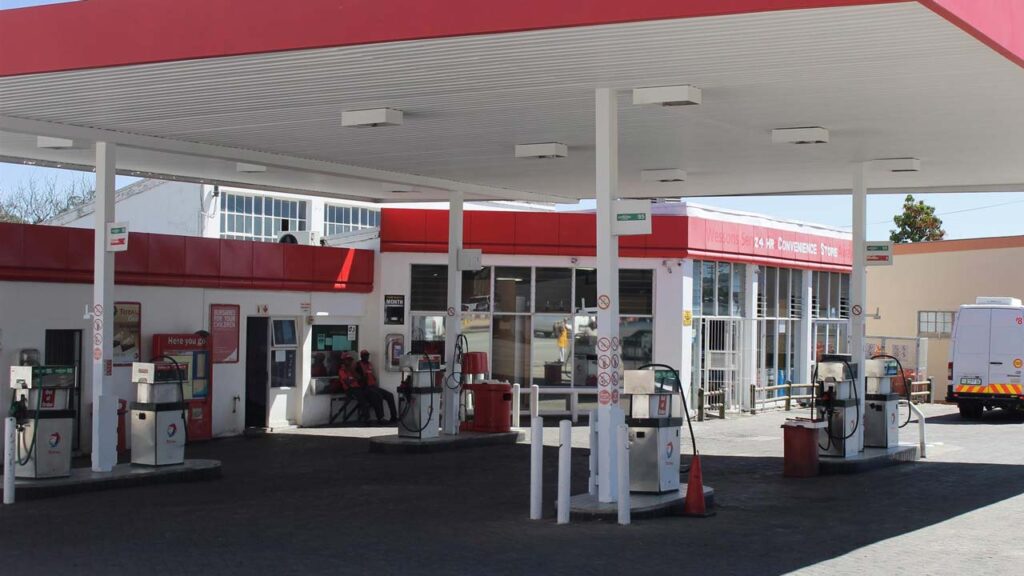
Fuel Station
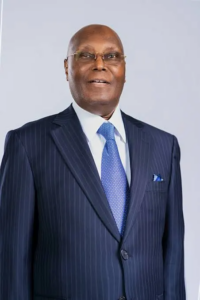
The Presidency has defended President Bola Tinubu administration’s 30-day petrol price discount, describing former Vice President Atiku Abubakar’s proposed production subsidy as a “dangerous mathematical fantasy wrapped in political deceit”.
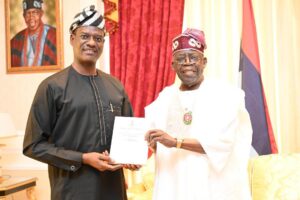
Special adviser to President Bola Tinubu on Media and Public Communications, Sunday Dare, who made the defence, said former Vice-President Atiku Abubakar’s criticism of the Nigerian National Petroleum Company (NNPC) Limited’s decision to extend its petrol discount reflected a misunderstanding of global energy markets and Nigeria’s crude oil production arrangements.
He described Atiku’s proposed production subsidy as a “dangerous mathematical fantasy wrapped in political deceit”.
Recall that Atiku had criticised the government’s approach to rising petrol prices, arguing for a production subsidy as an alternative to the current framework.
The presidential candidate of the African Democratic Congress (ADC) accused Tinubu of copying his proposal on petrol subsidy but limiting the measure to a 30-day discount.
He also argued that Nigerians needed long-term relief, describing the discount regime as “panic-driven publicity stunt”.
But the Presidential aide on Media and Public Communications said Nigeria could not afford a blanket production subsidy because the government did not have unrestricted access to all the crude oil produced in the country.
He said Nigeria produces about 1.8 million barrels of crude oil per day, but has fewer than 700,000 barrels available to the state after accounting for contractual obligations under joint ventures and production-sharing contracts.
“To propose a blanket ‘targeted production subsidy’ on crude without the physical, unencumbered volume to back it up is pure economic illiteracy,” Dare said.
According to him, using crude oil to subsidise domestic production without accounting for these commitments could undermine government revenue and revive the opacity associated with the former petrol subsidy regime.
He also argued that domestic refineries, including the Dangote Petroleum Refinery, require more crude oil than the government can freely allocate without affecting existing supply contracts.
Dare said the NNPC’s decision to forgo its retail profit margin for another 30 days was a temporary measure to cushion consumers against rising global oil prices, rather than a return to the former fuel subsidy system.
He described the intervention as “a market-smoothing price modulation framework, not a return to unbudgeted federal spending”.
He added that the government had negotiated an interim ceiling of N1,350 per litre on ex-gantry costs, under which refiners and importers would absorb cost increases above the threshold and recover them later when market conditions improve.
According to him, the arrangement is intended to moderate sudden petrol price increases and prevent transport fares from rising sharply whenever fuel prices climb.
“N1,400 today and N1,400 tomorrow provides far greater economic stability than N1,500 today and N1,300 tomorrow,” he said.
He said the administration was also pursuing longer-term measures, including expanding compressed natural gas infrastructure and establishing a strategic energy reserve to improve supply security and reduce exposure to global market shocks.
Dare maintained that the removal of petrol subsidies and the unification of the foreign exchange market were necessary to address long standing economic distortions, adding that the reforms had increased allocations to state and local governments.
He accused Atiku of exploiting economic hardship for political gain, describing his criticism as “election-laced demagoguery”.
“Chronic economic ailments built over thirty years cannot be cured by populist slogans or 30-day electioneering promises,” he said.
Dare said Nigerians should assess the administration’s policies against the country’s long-term economic needs rather than promises of immediate relief.