ADC must champion reforms with human face -Hon. Gbandi
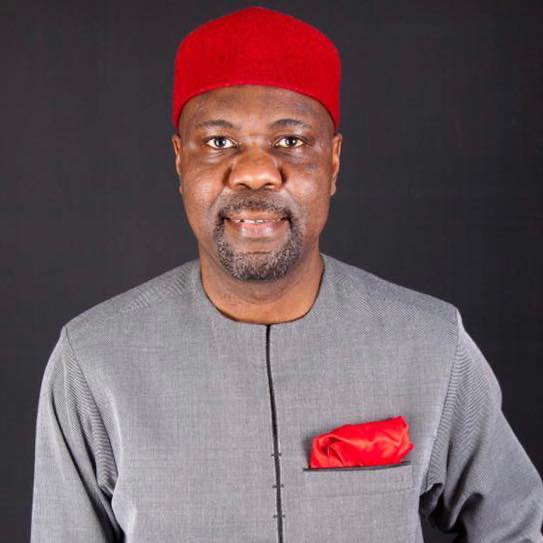
Hon Ken Gbandi
For decades, Hon. Kenneth Chibuogwu Gbandi has operated within the complex terrain of diaspora politics. As a prominent figure in the Nigerians in Diaspora Organisation (NIDOE), he has been part of sustained efforts to position the Nigerian diaspora not merely as remittance senders but as strategic stakeholders in governance, diplomacy, and development. In this interview with NGOZI EMEDOLIBE, he explains why the Nigerian diaspora should increasingly see itself as an extension of the nation’s political and economic ecosystem.
You have always been part of the African Democratic Congress (ADC). What informed your decision to pitch your tent with ADC?
My decision to identify with ADC was informed by values, not convenience. The party’s public mission has consistently emphasized transparency, accountability, inclusion, and resistance to godfatherism.
In the early 2020s, I was introduced to the party by the ADC founding chairman, Chief Okey Nwosu, a humble nation-builder and leader of leaders. For someone like me, whose public life has been shaped by diaspora engagement, policy advocacy, and democratic reform, ADC naturally became an ideological home.
I had long advocated for the recognition of the Nigerian diaspora as the 37th state of the federation. Within ADC, this aspiration found institutional expression through the creation of the ADC Diaspora Network (ADC-DN), recognized as the party’s seventh geopolitical zone. It remains the only formal diaspora structure within a Nigerian political party.
My public record in ADC since then has reflected the same commitment to clean politics, grassroots participation, inclusion, and national renewal.
How did it feel when the opposition unanimously decided to adopt ADC as their political platform of choice?
It was both humbling and validating. When a broad opposition coalition converges on ADC, it signals that the party’s platform, identity, and national—and diaspora—acceptability have matured beyond the margins.
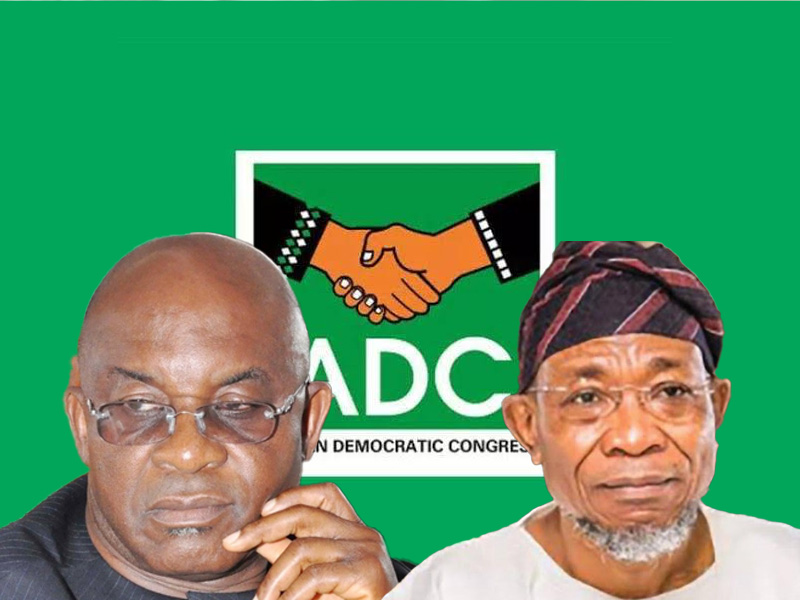
I see it as recognition that Nigeria needs a credible democratic alternative, not just another electoral vehicle. Public reports indicate that the coalition adopted ADC in July 2025, and INEC’s subsequent recognition of the David Mark–led ADC leadership gave that political moment institutional weight.
Nigeria is a multicultural and politically diverse society. Rising insecurity, corruption, widening economic inequality, and the dangerous drift toward a one-party state have made it a patriotic priority to build a robust democratic alternative capable of rescuing our democracy. I am glad that like-minded patriots are increasingly adopting ADC as that rallying point.
How is the party doing in Delta State, and what efforts are being made to make it a formidable alternative?
ADC in Delta State is currently in a phase of growth and consolidation. After the initial coalition challenges, I am pleased that we are increasingly placing the party above individual interests.
The party has continued building around coalition expansion, grassroots mobilization, and the attraction of credible new entrants. Public reports in late 2025 and early 2026 pointed to unity efforts in Delta State and the defection of several political actors into ADC, including former Labour Party figures and other local leaders.
Following the poorly managed APC convention in the state, we expect many individuals who share the vision of ADC—but who could not realize it within the APC—to join us.
Our strategy is straightforward: strengthen ward-to-state structures, welcome credible individuals, reduce elite capture so that everyone becomes a stakeholder, and build a people-driven political alternative capable of delivering people-centered governance.
You are familiar with democracy in other climes, especially Europe. What is your assessment of democracy in Nigeria today?
Is Nigeria still a democracy? I may be able to give you a definitive answer in 2027. At present, Nigeria under the APC government can best be described as a democracy in distress. Freedom House currently classifies Nigeria as “Partly Free,” citing persistent electoral irregularities, endemic corruption, insecurity, and abuses by security agencies.
We are witnessing increasing crackdowns on individuals with opposing political views, including selective persecution. Some ADC opposition figures have reportedly faced pressure through state institutions. Governors and legislators are also being pressured into the ruling party.
Nigeria certainly has democratic potential, but it has not yet achieved sufficient democratic depth. In stronger democracies, institutions are predictable, the judiciary serves as a guardrail for democracy, parties are more ideologically driven, oversight is stronger, and citizens are better protected.
The recent controversies surrounding tax and electoral reforms—and the disappointing conduct of many legislators—have further diminished public confidence in democratic institutions. In Nigeria, too much still depends on power brokers rather than systems. We have too many strongmen and not enough strong institutions.
As a staunch ADC member, what areas of governance should the party focus on?
ADC must focus on five key priorities: security, economic recovery, electoral integrity, social justice, and institutional reform.
Nigeria cannot move forward if citizens are unsafe, if economic reforms fail to translate into jobs and reduced hardship, if elections lack credibility, and if institutions remain vulnerable to capture.
Even the IMF, while acknowledging certain macroeconomic reforms, has noted that inflation remains high, per-capita growth is weak, and many Nigerians have yet to feel the benefits. Meanwhile, corruption continues to undermine public trust.
ADC must therefore champion reforms with a human face—reforms that Nigerians can believe in.
What is your assessment of the National Assembly today?
The National Assembly remains indispensable to democracy, but it has not fully lived up to its oversight responsibilities.
There have been some promising developments, such as the House of Representatives’ approval in 2025 of a broad package of constitutional amendment bills addressing judicial independence, electoral reform, security, and governance.
However, many reforms still suffer from weak enforcement, inadequate follow-through, and excessive executive influence. Both the tax and electoral reform processes have also faced allegations of manipulation and lack of transparency.
So while improvement is possible, meaningful progress will require stronger institutional independence within the current executive-legislative framework.
Transparent elections remain a concern. What would you recommend for credible elections in Nigeria?
First, there must be full technological transparency, from voter accreditation to result management. Real-time transmission of results may not be a perfect solution, but it is an important bridge toward rebuilding trust and reducing voter apathy.
Second, stricter enforcement against vote-buying and electoral violence.
Third, real-time public access to polling-unit results.
Fourth, stronger protection for INEC officials and voters.
Fifth, deeper party-agent training and citizen monitoring frameworks.
Freedom House continues to report that Nigerian elections are often marred by irregularities. I have also argued that diaspora-supported civic participation and vote-protection initiatives can help strengthen electoral credibility, because credible elections require both strong institutions and vigilant citizens.
What is your assessment of the Tinubu presidency?
My assessment is that the Tinubu presidency began with bold economic reforms but has lost public confidence due to harsh implementation, governance challenges, and increasing focus on political consolidation rather than governance.
Inflation remains high, per-capita growth remains weak, and poverty and food insecurity are still widespread. Even the Senate President recently acknowledged that several states face severe security challenges that could potentially affect the 2027 elections.
On civil liberties, organizations such as Amnesty International have raised concerns about the handling of protests demanding good governance and electoral transparency.
Many Nigerians today still do not feel economically secure, politically heard, or adequately protected.
Could you shed light on defections in Nigerian politics? Should legislation address it?
Political defections have become a symptom of weak party ideology and opportunistic politics.
Nigeria’s Constitution already attempts to regulate defections through Sections 68 and 109, which require legislators who defect to risk losing their seats except in cases of party division or merger.
The real challenge is inconsistent enforcement and the broad interpretation of those provisions. I support stronger constitutional clarity so that defections do not become tools for political distortion or backdoor realignment against the voters’ mandate.
The Nigerian electorate appears confused about leadership choices. What advice would you give them?
Nigerians must stop voting for packaging and start voting for character, competence, courage, and consistency.
A good leader must have a verifiable record, not just a loud slogan. Citizens should ask simple questions:
- What has this person built?
- What values does this person represent?
- How do they treat public trust?
- Are they accountable between elections?
How many town-hall meetings do they hold to report back to the people, or do they only appear during campaigns?
Nigeria will change when voters begin rewarding integrity, competence, and service above ethnicity, money, and empty popularity. That is the democratic culture we must build.
How will your experience in the leadership of Nigerians in Diaspora Organisation (NIDO Europe) impact your work in Delta State and Nigeria?
My years in NIDOE and at Hamburg Senate Foreigners Council taught me how to build institutions across borders, manage diverse stakeholders, mobilize international networks, and think strategically about policy, investment, and representation.
As Chairman of the Board of Trustees of NIDOE, diaspora engagement has remained central to my public work.
That experience is directly relevant to Delta State and Nigeria today. Development increasingly requires global networks, policy literacy, credibility, and the ability to translate advocacy into measurable outcomes.
This is the perspective I bring into politics: governance must be modern, accountable, and connected to the best practices Nigerians encounter across the world.