At 89, Obasanjo says leadership is Africa’s greatest test and promise
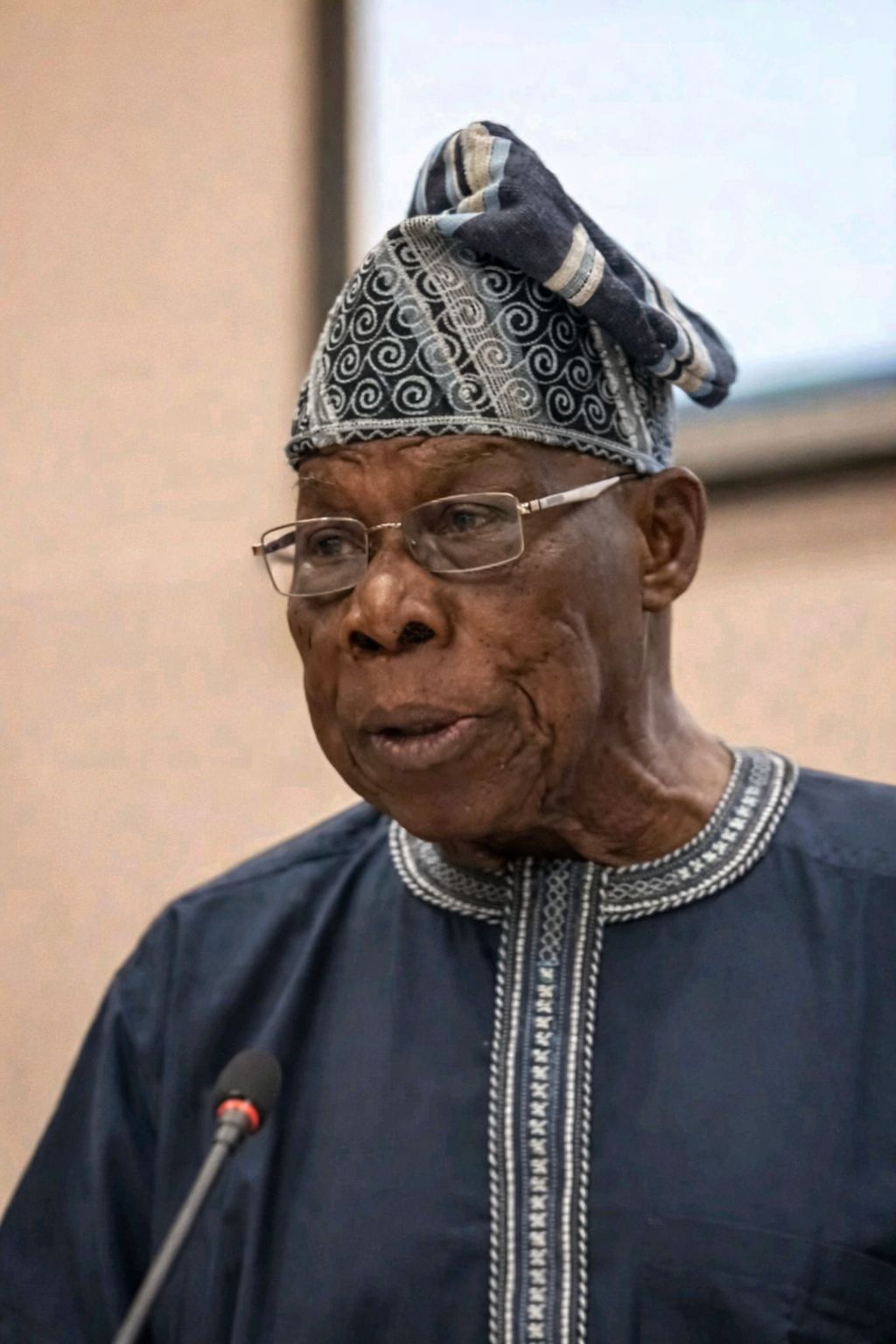
Obasanjo
Reflects on war, prison and power
Tinubu celebrates ex-President’s towering influence
Abiodun Taiwo, Abeokuta
Former President Olusegun Obasanjo has used the occasion of his 89th birthday to deliver a sweeping reflection on leadership, declaring that the greatest burden any individual can carry is the weight of a nation — and that the blessing lies in serving it faithfully.
Obasanjo spoke at an international colloquium held in Abeokuta to mark his birthday, themed “Burden and Blessing of Leadership: Reflections from Global Africa to the World.” Drawing from decades of military command, imprisonment, presidency and continental diplomacy, the elder statesman offered an unflinching assessment of power, responsibility and Africa’s leadership crisis.
“When I was a young officer,” he recalled, “a commanding officer told me: ‘The greatest burden a man can carry is his country on his shoulders. The greatest blessing he can receive is that country’s gratitude.’ At 89, I understand that the burden and the blessing are often the same thing.”
Obasanjo described leadership as profoundly lonely, particularly at moments when a single decision can alter the lives of millions.
He revisited January 1970, in the final days of the Nigerian Civil War, when as commander of the Third Marine Commando Division he had to decide whether to shell Owerri despite the presence of starving civilians.
“No textbook told me what to do,” he said. “No senior officer was going to make that call. It was mine alone.”
He said he chose restraint to prevent further humanitarian catastrophe — a decision he believes history has judged fairly.
The former president also reflected on his return to power in 1999, when Nigerians elected him after years of military rule. According to him, many citizens expected immediate transformation.
“They elected not just a president; some elected a miracle performer,” he said, noting that leadership often means being “elevated by hope and measured by time simultaneously.”
Obasanjo spoke of his imprisonment under the regime of Sani Abacha, during which he was detained for three and a half years and tried by what he described as a “kangaroo tribunal.”
He stressed that leadership without principle is merely administration, and that real leadership demands courage under pressure.
“Do not seek leadership because you want comfort,” he warned younger leaders. “If you are not willing to bear the burden, step aside.”
Despite the sacrifices, Obasanjo said he would embrace the responsibility again if given the opportunity.
He cited the 1979 handover of power to President Shehu Shagari as one of his proudest moments, describing it as a moral test.
“When I shook his hand and walked away from power, I felt relief — the relief of having been tested and not found wanting,” he said.
He also pointed to Nigeria’s Paris Club debt relief and the establishment of the Economic and Financial Crimes Commission (EFCC) during his civilian presidency as attempts to rebuild institutions and redirect national resources toward development.
“The blessing,” he said, “is the opportunity to serve and to matter at the hinge of history.”
Turning to continental affairs, Obasanjo was direct in his assessment of Africa’s persistent challenges.
“The primary cause is leadership failure,” he declared.
“Failure to build institutions. Failure to welcome accountability. Failure to serve the people rather than oneself.”
He described a recurring pattern across the continent: leaders who begin with reformist zeal but gradually govern for personal or narrow interests, weakening democratic institutions in the process.
To address this, he called for what he termed “leadership formation” — a process of building character and values, not merely technical skills.
“It is not enough to know the right thing to do. One must be formed so that doing the right thing is instinctive, even when the wrong thing is profitable,” he said.
Obasanjo urged African nations to take democracy seriously, not as a tool for electoral advantage but as a covenant with citizens.
He called for stronger independent judiciaries, regulatory bodies insulated from political interference, and universities capable of producing globally competitive graduates.
“A country whose trajectory depends entirely on the character of one person is permanently fragile,” he said, stressing the need to solve both institutional and personality problems in governance.
He also advocated deeper continental integration, describing economic cooperation as essential to Africa’s global competitiveness.
Highlighting Africa’s demographic profile, Obasanjo noted that the continent’s median age is below 20, describing this as either a “demographic dividend or a demographic disaster.”
Citing Nigeria’s large population of out-of-school children, he warned that failure to invest in youth education and employment could fuel instability and extremism.
“A continent that fails its youth plants the seeds of instability for generations,” he cautioned.
Addressing Africans in the diaspora, Obasanjo described them as an underutilised development asset. He urged them to engage not only as remittance senders or critics from afar, but as active partners in Africa’s renewal.
“Africa needs you as partners,” he said, calling on governments to create legal and economic conditions that encourage diaspora confidence and investment.
Closing his address, Obasanjo expressed gratitude to God, Nigeria and Africa for what he described as a long and eventful life marked by war, peace, imprisonment and redemption.
He rejected divisive politics based on region or religion, insisting that Nigeria cannot survive on hegemony or exclusion.
The former president also dismissed the circulation of a fake document claiming he had written a notice of his own death.
“That is their wish and not God’s wish for me,” he said in a lighter moment. “I dey kampe as usual.”
As dignitaries from across Nigeria and beyond gathered to celebrate him, Obasanjo left the audience with a final reflection:
“Africa is not a problem to be managed. Africa is a promise to be fulfilled. And leadership — honest, courageous, self-giving leadership — is how that promise will be kept.”
At 89, the former Head of State and two-term civilian President made it clear that while his generation’s chapter may be closing, the test of leadership for Africa’s future remains urgent and unfinished.
Meanwhile, President Bola Tinubu has paid glowing tribute to former President Olusegun Obasanjo on his 89th birthday.
Tinubu rejoiced with the elder statesman, describing his influence in Nigeria, Africa and globally as significant.
The President’s message is contained in a statement issued by his spokesman, Mr Bayo Onanuga, on Wednesday in Abuja.
Tinubu noted Obasanjo’s courage and sacrifices in service to the nation.
He recalled that Obasanjo served as military Head of State from 1976 to 1979 and handed over power to a civilian administration in 1979.
The president also highlighted his tenure as Nigeria’s first civilian leader in the Fourth Republic from 1999 to 2007.
Tinubu affirmed the former leader’s historic roles, including fighting to preserve Nigeria’s unity and advocating democracy.
He also acknowledged Obasanjo’s time in prison for opposing military rule and his efforts in advancing Africa’s political and economic interests.
“As Chief Obasanjo turns 89, we recognise the zeal and wisdom he continues to bring to Nigeria’s development,” the President said.
Tinubu commended the former president’s intellectual contributions through books and public interventions.
He prayed for more years of good health, strength and wisdom for Obasanjo as he continued to serve the nation and humanity.