FEC okays PH airport concession, biometric checks at terminals
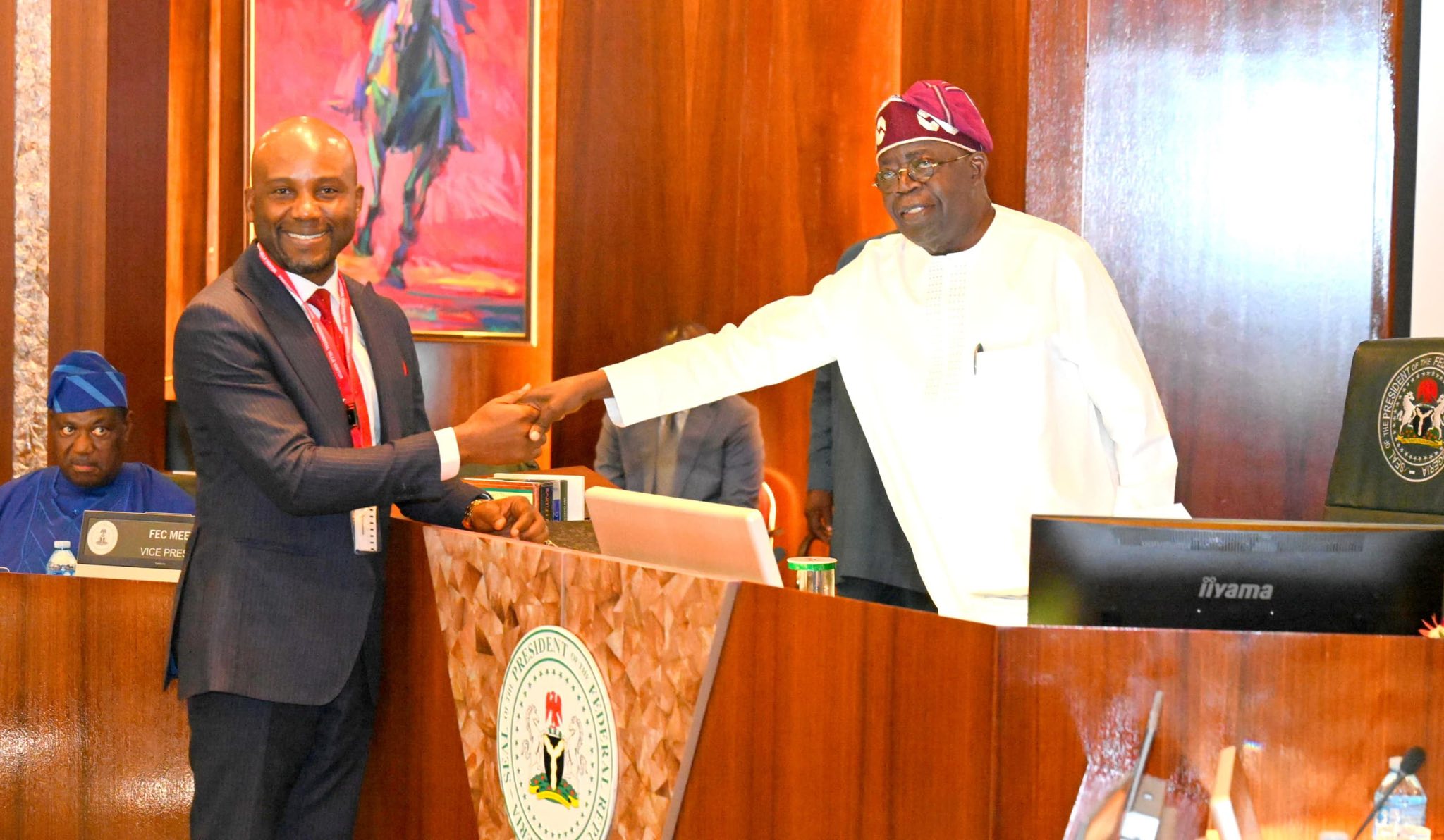
Tinubu at FEC
Approves road projects worth over N400bn
The Federal Executive Council (FEC) has approved a series of key aviation projects, including the concession of Port Harcourt International Airport and the introduction of biometric verification systems across Nigerian airports.
Minister of Aviation and Aerospace Development, Festus Keyamo, disclosed this while briefing State House correspondents after the FEC meeting presided over by President Bola Tinubu at the Presidential Villa, Abuja.
Keyamo said eight memos from his ministry were considered and approved, covering airport management, infrastructure, safety, and modernisation initiatives.
He said one of the approvals was for contracts to provide maintenance and support services for airport management solutions at Nigeria’s five international airports — Abuja, Lagos, Kano, Port Harcourt, and Enugu.
“These are firms that have been maintaining our airport management systems effectively over the years, and the Council approved their continued engagement,” he said.
The minister also announced the procurement and installation of advanced tertiary power systems and 14 VHF remote stations by the Nigerian Airspace Management Agency (NAMA) to improve navigational safety.
“We also got approval to purchase 15 airport rescue and firefighting vehicles to meet International Civil Aviation Organisation (ICAO) standards at our international airports,” Keyamo said.
He further disclosed that the Council approved the exclusion of all Federal Airports Authority of Nigeria (FAAN) residential and operational properties within and around airport premises from sale to private individuals.
“Properties within airport security and safety zones are now officially excluded from disposal. Those who claimed to have bought such properties should take note, we will not concede them,” the minister stated.
On infrastructure, Keyamo said approval was granted for the construction of a permanent headquarters for NAMA in Abuja, following the agency’s relocation from Lagos.
“NAMA currently operates from rented facilities, which poses security risks. We will now have a permanent and purpose-built headquarters in Abuja,” he said.
He added that FEC approved the full business case for the concession of Port Harcourt International Airport to private investors, noting increased investor interest since the Tinubu administration took office.
“In the past, no major investor showed interest in Port Harcourt Airport. Now, over six credible firms are competing for it. This shows growing confidence in the Nigerian economy,” Keyamo said.
He assured aviation workers that no jobs would be lost under the new concession arrangement.
“We will engage the unions fully. No worker will lose their job as a result of the concession process. The goal is efficiency, not retrenchment,” he emphasised.
Keyamo also said the Council approved the concession of biometric verification systems at all airports to enhance passenger identification and security.
“The system will link passengers’ National Identification Numbers (NIN) to airport databases to verify their identities during travel. It’s part of our ICAO-aligned safety reforms,” he said.
He further disclosed plans to upgrade airport lighting systems to extend night operations and boost airline productivity.
Some airports close by 6.00 p.m. due to poor lighting. We’re installing new airfield lighting systems to enable night flights and improve revenue for local carriers,” the minister said.
Keyamo reaffirmed the administration’s commitment to modernising Nigeria’s aviation infrastructure and making the sector globally competitive.
In another development, the Federal Executive Council (FEC) on Thursday approved major road contracts and project reviews valued at over N400 billion to enhance road infrastructure across the country.
Minister of Works, Dave Umahi, disclosed this while briefing State House correspondents after the FEC meeting presided over by President Bola Tinubu at the Presidential Villa, Abuja.
Umahi said he presented 11 memos, nine of which were for review of inherited projects, while two were for new contract awards.
He said the council approved the award of Lagos–Ibadan Expressway Phase Two, Section Two, at the cost of N43 billion, to address failed portions and complete underpasses and ramps.
“We also got approval for the dualisation of Mushin–NNPC Junction–Papa Oshodi Expressway, which was reviewed from N11 billion to N19 billion due to cost differentials,” he said.
The minister added that the council approved the construction of Section Three of the Sokoto–Badagry Superhighway, covering 162.97 kilometres from Badagry through Ogun to Oyo State border, at a cost of N3.39 billion per kilometre.
He said several ongoing projects inherited from previous administrations were reviewed for funding and design adjustments, including the Ilorin–Omu Aran–Egba road and the old Enugu–Onitsha road.
According to him, the 216-kilometre Ilorin–Omu Aran–Egba road has been phased, with 31 kilometres to be executed under Phase One at a cost of N43 billion, while the remaining 184 kilometres will follow when funding improves.
He explained that the East–West Road project was redesigned to improve traffic flow and pavement strength, with Phase One maintained at N156 billion for dual carriageways and bridges.
Umahi said several state governments had also taken over federal road projects within their jurisdictions to ease funding pressure and speed up delivery.
He announced the review of the Ota–Idi-Iroko road project in Ogun State, which now features rigid concrete pavement and an additional bridge, bringing its cost from N38 billion to N52 billion.
The minister further said FEC approved the rehabilitation of Jos–Turunkun–Maraban–Jama’a road in Kaduna State for N30 billion, as well as the reconstruction of Ijebu–Ibu Ete–Egba–Owena road in Ogun and Ondo States for N53 billion.
He reiterated the Tinubu administration’s commitment to concrete-based road construction for durability and cost efficiency.
“Our focus remains delivering durable road infrastructure to support economic growth and ease of movement across the federation.”