Who’s afraid of Electoral Act amendment?
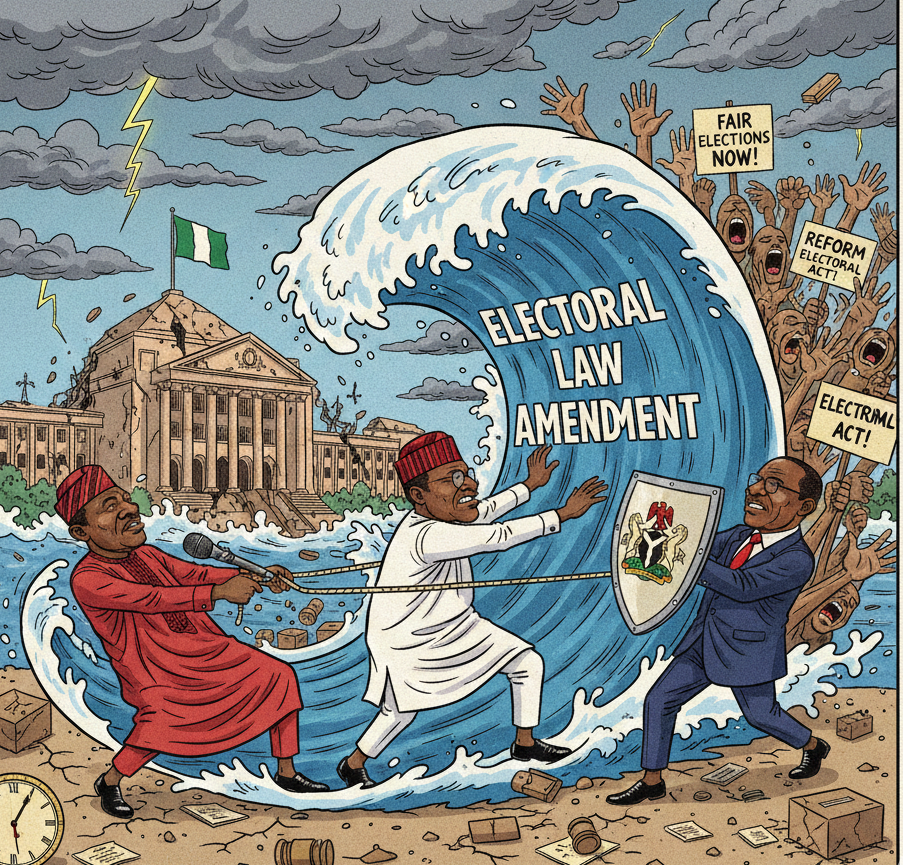
Electoral Act
*All eyes on NASS to restore public confidence in 2027 poll
BY TOSIN ADAMS & ORIAKU IJELE
As Nigeria looks toward the 2027 general elections, the nation finds itself at a critical crossroads. While the 2022 Electoral Act was initially hailed as a revolutionary step, its practical application during the 2023 polls revealed significant “gray areas” and operational bottlenecks that dampened public confidence. To prevent a repeat of these systemic frictions, there is an urgent need to refine the legal framework—specifically through the proposed Electoral Act (Amendment) Bill 2025.
The Daily Monitor on Sunday notes that the primary motivation for amending the law is the “Trust Deficit.” In previous cycles, ambiguities surrounding the electronic transmission of results led to widespread litigation and public outcry. The current push for reform seeks to move from discretionary technology use to mandatory mandates.
Key areas requiring legislative intervention include: Mandatory Electronic Transmission: Clarifying Section 60 to ensure that results uploaded to the IReV (INEC Result Viewing) portal carry equal legal weight to physical tally sheets.
Stiffer Penalties for Electoral Crimes: The Senate has proposed raising fines for vote-buying to ₦5 million, coupled with prison terms and a 10-year ban from contesting elections. This is essential to curb the “monetization” of the ballot.
Judicial Timelines: Amendments are needed to ensure all election petitions are concluded before winners are sworn into office, preventing the “stolen mandate” narrative that often follows delayed judgments.
Proposals also need to allow the use of National Identification Numbers (NIN) or passports alongside the Permanent Voter Card (PVC) to reduce disenfranchisement caused by logistical delays in card distribution.
This changes largely depend on the National Assembly. The Nigerian Senate serves as the constitutional architect of this reform. Currently, the Upper Chamber is considering a “Repeal and Re-enactment” of the 2022 Act to create a more cohesive document rather than a patchwork of amendments.
The Senate’s responsibility goes beyond merely passing clauses; it must act as a bulwark against political interference. By institutionalising the independence of the Independent National Electoral Commission (INEC)—specifically through a more transparent process for appointing National and Resident Electoral Commissioners—the Senate can ensure that the “referees” of the 2027 polls are non-partisan professionals rather than political loyalists. Furthermore, the Senate’s power of oversight is vital in ensuring that election funds are released early (as proposed in the 2025 Bill) to avoid the “fire-brigade” preparations that have historically plagued INEC.
If the Senate provides the “engine,” Civil Society Organizations (CSOs) like Yiaga Africa, the Situation Room, and PLAC provide the “fuel” and “guidance.” In Nigeria, CSOs have evolved from mere observers to active policy influencers.
CSOs were instrumental in drafting the “Electoral Act 2025” draft by providing data-driven recommendations based on field observations from the 2023 elections. They serve as the technical bridge between the citizens’ experiences and legislative language.
Historically, electoral reforms in Nigeria are often delayed until the eve of the election, providing a convenient excuse for the executive to withhold assent. CSOs are currently leading the “FixElectionsNG” campaign to ensure the bill is signed by mid-2026, giving INEC a full year to implement the changes.
The leading coalition of opposition is not left out in this quest. Yesterday, Bolaji Abdullahi, the spokesperson of ADC, accused the Senate of deliberately delaying the amendment of the Electoral Act. But this leaves a bitter taste in the mouths of the voters, who have been yearning over the years for an opportunity to elect their chosen leaders, to forestall the usual imposition of leaders through faulty electoral mechanism.
This of course, makes one wonder who is afraid of electoral integrity in Nigeria?