Why fuel pump price keep fluctuating– NMDPRA
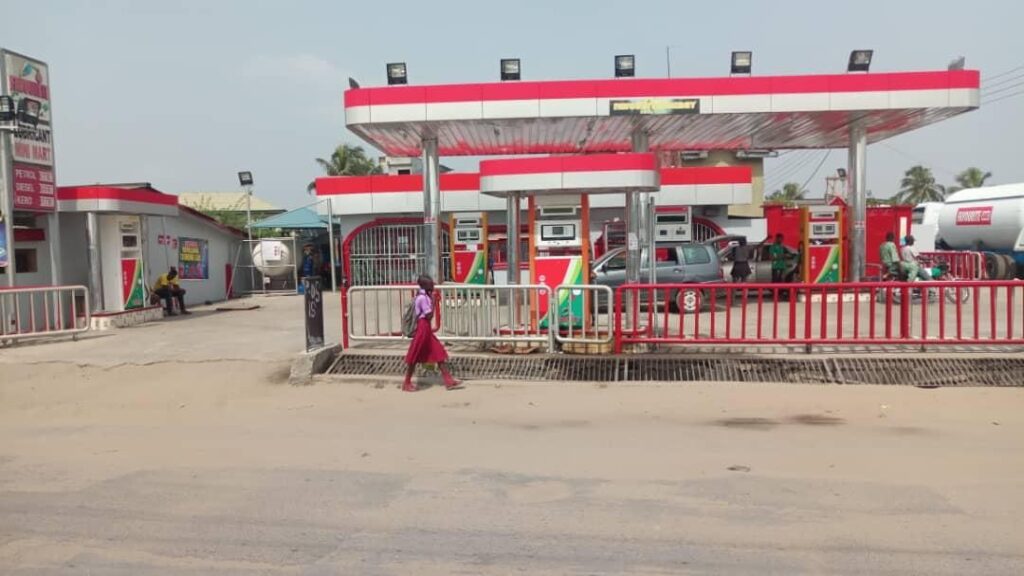
Petrol Station
Nigerians groan, say some filling stations sell as high as N1,190 per litre in Lagos
Energy experts highlight solutions to rising petrol prices
Emeka Agu with agency reports
The Nigerian Midstream and Downstream Petroleum Regulatory Authority (NMDPRA) says fluctuations in fuel pump prices are a direct result of market dynamics under Nigeria’s deregulated downstream petroleum sector.
The authority’s spokesperson, George Ene-Ita, said this in an interview with the News Agency of Nigeria (NAN) in Abuja while reacting to the recent increase in fuel pump prices linked to the ongoing Middle East crisis.
NAN reports that many motorists in Abuja have expressed concern and dissatisfaction over the recent hike in prices of Premium Motor Spirit (PMS) called fuel, which were previously sold between N875 and N880 per litre.
Currently, independent marketers are selling fuel between N960 and N1,000 per litre and above, while outlets of the Nigerian National Petroleum Company Limited are selling at about N960 per litre.
Nigerians have expressed concern on the justification for the increase in pump price and the implications to the country.
Ene-Ita said the variations in pump prices across the country were not due to regulatory interference but were driven by supply and demand forces within the market.
“Nigeria has been operating a fully deregulated downstream petroleum regime since the inception of the current administration.
“Therefore, pump price vagaries are purely as a result of market dynamics,” he said.
He explained that under a deregulated framework, petroleum product prices responded to prevailing market conditions.
He added that the policy direction was aimed at allowing market forces to determine prices while encouraging competition, efficiency and increased investment in Nigeria’s downstream oil and gas sector.
Meanwhile, Energy experts on Sunday said that strengthening local refining and enforcing domestic crude supply obligations could help stabilise fuel prices and shield the economy from external shocks.
The experts said this in separate interviews with the News Agency of Nigeria (NAN) in Lagos.
They said this following the recent increase in the pump price of Premium Motor Spirit (PMS), commonly known as petrol, from about N825 per litre to as high as N1,190 at some filling stations.
Checks across Lagos showed that petrol prices rose significantly at several outlets on Sunday, reflecting developments in the global oil market.
This has resulted in severe hardship for many Nigerians, especially commuters who have had to pay higher fares to move around. Several small businesses have also raised prices of the services to cover the new fuel prices.
The Chief Executive Officer of the Centre for the Promotion of Private Enterprise, Dr Muda Yusuf, said rising crude oil prices remained the primary driver of the latest increase in domestic fuel prices.
“The main challenge here is crude oil price.
“It is the most critical determinant of petroleum product prices, even for the Dangote Refinery, because the crude oil it uses is purchased at prevailing international market prices,” Yusuf said.
According to him, global crude oil prices recently surged from about 65 dollars per barrel to nearly 92 dollars per barrel within a short period, pushing up the cost of refined petroleum products worldwide.
He explained that crude oil, the primary raw material for refined petroleum products, directly influences the pricing structure of petrol and other derivatives.
Yusuf noted that although the refinery is located in Nigeria, it still relies heavily on imported crude oil feedstock.
“About 70 per cent or more of the crude used by the refinery is sourced externally.
“That means it is vulnerable to global price volatility,” he added.
Yusuf added that even the crude supplied locally offers limited pricing advantage because Nigerian crude allocated to domestic refiners was usually priced at international market benchmarks.
“The roughly 30 per cent sourced locally is still priced in line with global benchmarks.
“The only modest advantage may come from reduced freight costs,” he said.
However, Yusuf maintained that the presence of the Dangote Refinery had significantly improved Nigeria’s energy security and prevented a deeper fuel price crisis.
“If we did not have the Dangote Refinery, the situation would likely have been much worse.
“We might have been talking about petrol selling for N1,500 per litre or even higher.”
He added that the refinery had also helped stabilise supply and reduced the likelihood of fuel scarcity and long queues.
“At least we do not have an availability crisis.
“We are no longer witnessing the kind of queues that used to characterise the system,” he said.
Yusuf also linked the recent volatility in crude oil prices to global geopolitical tensions.
“Until there is some normalisation in the geopolitical environment and stabilisation in crude oil prices globally, we may have to contend with this situation,” he said.
Similarly, energy policy expert Prof. Ken Ife said Africa’s heavy dependence on imported petroleum products continues to expose the continent to global price shocks.
Citing data from the Organisation of the Petroleum Exporting Countries (OPEC), Ife noted that Nigeria currently had about 445,000 barrels of crude allocated for domestic refining.
However, he said the Dangote Refinery required about 13 crude oil cargoes to meet local demand but currently receives only about five.
He therefore called for stricter enforcement of domestic crude supply obligations to strengthen local refining operations.
In the same vein, the National President of the Petroleum Products Retail Outlets Owners Association of Nigeria (PETROAN), Dr Billy Gillis-Harry, warned that escalating tensions in the Middle East were pushing global petroleum prices upward.
According to him, persistent attacks around the strategic Strait of Hormuz, a maritime route responsible for nearly 30 per cent of global crude shipments, pose serious risks to global energy supply chains.
Gillis-Harry said, could “The situation is worsening. Before the conflict escalated, PMS sold at about N774 per litre, but as tensions intensified, prices climbed to between N950 and N970 per litre.”
He added that diesel prices had also surged significantly, rising from about N950 per litre before the crisis to nearly N1,400 per litre.
Gillis-Harry stressed the need to rehabilitate Nigeria’s state-owned refineries and strengthen domestic refining capacity under the Nigerian National Petroleum Company Ltd.
“Local refining will provide a buffer against global disruptions since crude oil resources are readily available in the country,” he said.
He warned that if geopolitical tensions persist, petrol prices could approach N1,500 per litre while diesel could exceed N2,000 per litre.
“As PMS is critical for transportation and diesel is essential for manufacturing and industry, further increases will worsen inflation and push up the prices of goods nationwide,” he said.
Meanwhile, a NAN correspondent who monitored fuel sales across Lagos observed differences in petrol prices at retail outlets.
At stations operated by Eterna Plc in Gbagada and Ikoyi, petrol sold for about N1,040 per litre, while outlets belonging to Northwest Petroleum and Fatgbems Petroleum sold the product at around N1,030 per litre.
Stations operated by Mobil Nigeria sold petrol at approximately N1,025 per litre, while an outlet operated by NNPC Ltd. on Yaya Abatan Road dispensed the product at N1,005 per litre.
At Oniwaya Bus Stop in Agege, petrol sold for about N1,030 per litre as motorists rushed to secure supplies amid rising prices.