Why Nollywood directors avoid action movies- Adim Williams
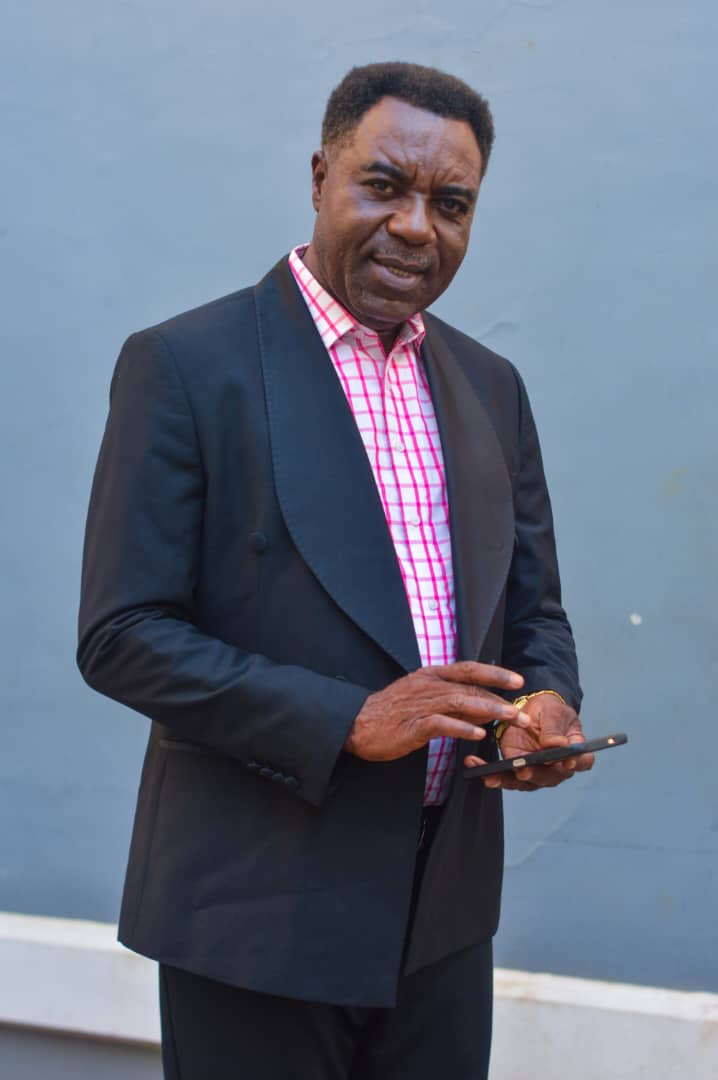
Adim Williams
He is among the old chip off the block of directors that made Nollywood a brand in the international movie circle, though, currently, his attention has moved to acting. Script writer, director, and actor, Adim Williams, takes us on a journey of his remarkable career in this exclusive interview with ORJI ONYEKWERE.
Are you doing any job presently?
Yes, yes, I am planning to shoot a movie from the 28th of this month. Yeah, but in between, I’m involved in some other jobs, acting-wise.
Yeah, I’ve done a lot of acting these days, you know, for the past two years.
It’s like acting has become more profitable, or you are just looking for the prominence?
Well, it was part of my original plan for the industry, you know, most of us started as actors. If you remember I acted in Rattlesnake Part 2, Zeb Ejiro’s movie, Kenneth Okonkwo’s movie, quite a number of them before writing came calling. It was from writing that I went into directing and made my best mark as a movie director.
Also, I studied Theater Arts, I was the best graduating student of my set then from the University of Calabar, Cross River State and I specialised in writing and directing. So, it was natural for me to flow into movie directing. But then, I set a target for myself that at a point in time, I would like to slow down on directing. The reason is that for you to do real directing, it requires a whole lot of work like our generation did. You have to immerse yourself into it. I had this plan and I even set a date, by then, 2010 was far off and before you know it , it got to 2010. So, this was part of my life plan.
Now that you have concentrated on acting, if you go back to directing, how will you be able to catch up with latest techniques in directing?
No, no, no. I didn’t say I stopped directing. Okay. I said I’m going to slow it down, in what we call commercial directing. You know, picking up every job that comes your way, being busy every time on location, directing 24-7, that’s what I stayed away from. So, now I choose the kind of jobs I do.
Again, majority of the movies that are churned out these days, the producers do not pay the kind of money they used to pay in those days, relatively considering the value of money and all that. Though, now, you have very small percentage of jobs actually come with that kind of money, like Netflix jobs, but everybody cannot be there.
So, it not just about my pay but also the logistics involved. Majority of the producers shoot for YouTube. YouTube consume 90 per cent of production these days and the general believe is that YouTube production is not what you will spend so much money on.
That’s production value sensitive. I will break it down. For instance, if you are shooting a movie for the cinema and you are shooting a scene where a Senator is going on a tour. Remember for a cinema, people will come, sit and watch, they will want to see that production value. So, they will want to see a number of expensive vehicles, that’s production value. How much did you spend on that scene where a Senator or Governor is moving and for a cinema movie, you will spend money there and make it as glamorous as possible. But YouTube market doesn’t demand that level of theatrics.
These are part of the reasons why I stopped picking jobs because in terms of logistics, they cannot meet my level. Again, if you take a closer look, you will see that most people from my generation who made this brand what it is today: the likes of Andy Amanechi, Zeb Ejiro, Lancelot Imaseun, Teco Benson and others, you don’t see them regularly these days. It’s not because they no longer direct, but they do other things and spend more of their time doing their own productions in the audio-visual industry.
Teco Benson was the first director to shoot an action movie in Nollywood and a lot of directors have shied away from this genre of movie. Is it that we don’t have the manpower or the technical capabilities?
I give kudos to my friend Teco Benson, to have done those jobs, ‘State of Emergency’ and others. This is because it is not easy to shoot that kind of movie in this environment and it becomes successful.
I think the success of those action movies is because he was able to thinker with the realities of our environment for them to be successful, for our people to appreciate them. Every movie brand has its own specialty, let me put it like that.
Every movie brand has its own specialty and every movie brand has an expectation from the viewers all over the world. And one of the things our viewers, the audience of Nollywood expects from us is not action movies.
No, no, it’s not what they’re expecting from us. That’s number one. Number two. You really cannot make action movies the way Hollywood makes them. We don’t have the budget, the technology and the training. But most importantly, it is not what is expected of you because your movie is expected to reflect your history, your environment, your culture, and so on and so forth.
We don’t live in an environment where everybody holds a gun and it becomes unrealistic where everyone begins to bring out gun, is this Lagos or my village?
If you look at Indian films, for instance, yes, they also do action film, but they have a different film idea. Now, if you want to watch an action film, you wouldn’t go to an Indian film, you will go to Hollywood, because that’s where, you know, they will give you the very best of it.
Recently, somebody approached me and we are working on something. He said he has a channel that beams to people in Canada and part of United States and what he wants strictly is our ancient stories.
They don’t want to see anything modern. They want to see movies that talk about our history; our culture and way of life, style of marriages and things like that. Fairy tales, myths and legends. You can see they these are people living abroad, they have seen enough of modernity and they want something they can connect with. There’s something I saw a couple of years back on Facebook, where igbo people are building mud houses with thatched roofs and it’s like an Igbo community in one state in the US. They are trying to recreate our culture and some of these nostalgia things needed to reflect in some of our movies.
That’s why I praise anybody who does action movies because it’s not familiar with our environment and you also have to be careful so that you don’t run away from the environment.
Most of the present set of actors don’t have a strong grip of our culture and traditions. Shooting such movies will be a herculean task?
Yes. You are right, it’s a thing of concern because there’s a generation who knew our culture first hand as against a generation who knew it partly or halfway. There’s a new generation who you really need to teach some things. The good news is that there’s something about arts, you will be surprised at some young people that do traditional praise singing, their level of creativity and deep knowledge of some of our traditional languages.
I was at Ilah, where I played the role of strong medicine man. I was amazed at how a young man in his 20s chanted this praise for almost 30minutes non -stop. I was like where did this boy learn this.
There was a young man on the Facebook that was combining his own with flute and he was making money.
One thing about the Igbos is that when you place value on anything, I mean money, those that can do it will come out. They may not be as proficient as Pete Edochie or Chiwetalu Agu, but you will still see a whole lot of spectaculars. Once you place value on these things, our people will do it
Don’t forget that some parts of the South East region are still raw and strong adherents of the tradition. Some of the Enugu, Ebonyi people can be compared to people that are still natural.
If you go to Anambra West or North like Nando area, they are very strong in their tradition even their women. Just put value on that thing and you will see people that will do it
Let’s go back to your movie ‘Ibu in London’. Your critics said you copied the idea from Osuofia in London. What do you have to say?
Anything arts, there’s nothing wrong in copying but when you copy, copy well. But I will tell you how Mr Ibu in London came about. Myself, Mr Ibu ( late John Okafor) Teco Benson, Omotola Jalade, Tunji Bamishigbin and a whole lot of Yoruba stars went for an award in UK in 2003, that’s Federation of Nigerian in Entertainment, UK award, where I won the best script writer in Nollywood.
After the award, and since we had a visa, the producer of Mr. Ibu, late Chukwuka Emelifeonwu (KASVID), told Mr Ibu, now that you have the visa, if we don’t use it , it will expire. What can we do? Even when we went for the award, I and Ibu thought about it also, that there’s a lot we can explore in this environment because we had free time to walk around and people identified him and we snapped pictures.
Me and Ibu were close and we stayed in the same apartment and it was like we can explore this opportunity of coming to London. That was when the idea came. It was the award and the visa that gave rise to Mr Ibu in London. So, it’s not the success of Osuofia in London that made us to shoot, no. This is how most of these top films are shot, even Hollywood movies. So, it’s allowed to copy. Again, Osuofia is one brand and Mr Ibu is a different brand entirely.
Are you thinking of shooting skits?
Yes. I will, the stuffs I want to do are not necessarily on drama. There are lots of things I want to do outside the movie industry in terms of pushing my idea especially on our political terrain.
I am very highly politically aware. I have a lot I want to talk about in religion and life generally. The answer is yes.