2027: Why Lagos, Kano, Kaduna lead as national voter register hits 103m – INEC
Voters in Nigeria
.Electoral umpire to subject BVAS to 6-day integrity stress-test Oct 23 -Amupitan
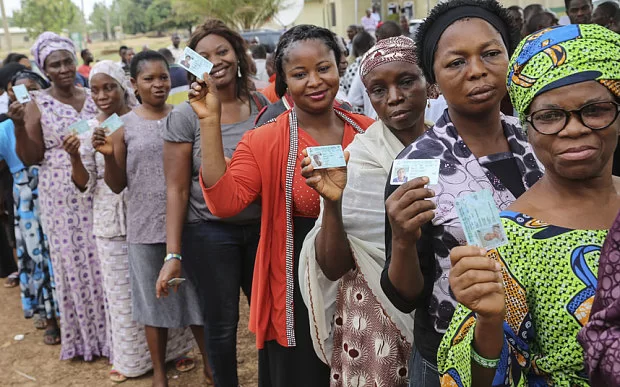
The Independent National Electoral Commission (INEC) says Lagos and Kano states recorded the highest number of registered voters, as the National Register of Voters hit 103 million ahead of the 2027 general elections.
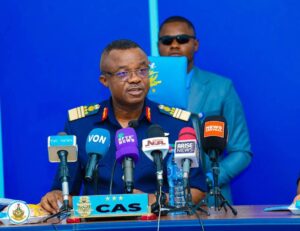
INEC Chairman, Prof. Joash Amupitan, disclosed this on Tuesday in Abuja during a World Press Conference and National Stakeholders’ Meeting, convened to mark 100 days to the 2027 general elections.
According to him, Lagos state leads the top 10 states with 7,488,633 registered voters, followed closely by Kano state with 6,570,276 voters, Kaduna – 4,662,640, Katsina – 3,876,05, Rivers – 3,736,434 and Oyo -3,588,11.
He also stated that Delta followed with 3,525,988, Benue – 3,057,225, Ogun – 3,037,981 and Bauchi – 3,012,547 registered voters.
“At the other end of the table, Ekiti State has the lowest number of registered voters, with 1,055,708. It is followed by Bayelsa which has 1,200,691 registered voters.
“The FCT ranks next from the bottom with 1,732,043, followed by Yobe with 1,733,671 and Gombe with 1,768,566,’’ he said.
On the gender distribution, Amupitan said male voters accounted for 53,528,218, representing 51.75 per cent of the register, while female voters number 49,900,497, representing 48.25 per cent.
He added that age profile showed that the register was dominated by voters aged 35 to 49 years, accounting for 43,265,946 voters or 41.83 per cent of the total.
“They are followed by voters aged 18 to 34 years, numbering 29,777,578, representing 28.79 per cent.
“Voters aged 50 to 69 years account for 22,982,900, or 22.22 per cent, while those aged 70 years and above are the smallest age group, with 7,402,291 voters, representing 7.16 per cent,’’ he said.
The INEC chairman also disclosed that persons with disabilities (PWDs), spread across 10 disability categories, accounted for 232,658 represented 0.23 per cent of the total 103.43 million registered voters,
“The largest category is “Others”, with 101,183 voters, accounting for 43.49 per cent of all registered PWDs.
“This is followed by albinism, with 44,023 voters (18.92 per cent) and physical impediment, with 27,141 (11.67 per cent),’’ he stated.
“Those registered under blindness number 19,939 (8.57 per cent), while deafness accounts for 14,326 (6.16 per cent).
“The register also contains 8,832 voters with autism (3.80 per cent), 7,723 with cognitive or learning disabilities (3.32 per cent), and 5,755 with little stature (2.47 per cent).
“The smallest categories are fown syndrome, with 2,080 voters (0.89 per cent), and spinal cord injury, with 1,656 voters (0.71 per cent),’’ he said..
The INEC chairman also disclosed that the final register would be presented to political parties on Dec. 15.
He added in line with Section 19(1) of the Electoral Act 2026, the updated register of voters would be displayed for public scrutiny across all registration areas (RAs) from Oct. 9 to Oct. 15 to allow for claims and objections.
Amupitan said that the distribution of Phase 1 Permanent Voters Cards (PVCs) at local government area centres would also commence on Oct. 9.
Speaking on technological upgrades, the INEC chairman noted that Phase 3 of the CVR introduced an Online Registration Portal to streamline participation, alongside Printable PVC technology under Section 18(1) of the Electoral Act 2026 to eliminate card issuance delays.
On candidate nominations, he said that 18 of the 22 registered political parties submitted 36 presidential and vice-presidential candidates via the INEC Candidates Nomination Portal (ICNP).
According to him, Accord, All Progressives Grand Alliance (APGA) and Youth Party nominated no presidential candidates, while the New Nigeria Peoples Party (NNPP) withdrew its presidential nomination during the substitution window.
He also disclosed that 21 political parties sponsored 1,313 senate candidates, 3,547 House of Representatives candidates, 936 governorship/deputy governorship candidates, and 9,692 state House of Assembly candidates.
He said that while the personal details for state candidates were published on Aug. 29, the final list would be published by the commission on Oct. 10.
Amupitan confirmed that all 112 administrative complaints over candidate substitutions and typos were resolved, except those undergoing litigations.
“However, we have recently received complaints from some political parties and aggrieved aspirants, drawing our attention to the recent Supreme Court decision in INEC v. Zenith Labour Party delivered on Sept. 24.
“The judgement affirmed the constitutionality of section 77(5)-(7) of the Electoral Act, 2026 and also upholding our Revised Timetable and Schedule of Activities for the 2027 General Election.
“We only received the certified true copy of this judgment this morning (Tuesday) and it is being reviewed,” he said.
Amupitan also said that pursuant to court verdicts, INEC had successfully restored 27 previously suppressed state constituencies across Benue, Delta, Jigawa and Kogi states between June and August.
He added that political party primaries and candidate nominations for those constituencies had been completed.
Meanwhile, the Electoral umpire says all configured Bimodal Voter Accreditation System (BVAS) devices will undergo a six-day nationwide stress-testing exercise from Oct. 23 to Oct. 28, ahead of the 2027 General Elections.
INEC Chairman, Prof. Joash Amupitan (SAN), disclosed this on Tuesday in Abuja during a World News Conference and National Stakeholders’ Meeting, convened to mark 100 days to the 2027 general election.
Amupitan described the stress-test as part of a comprehensive quality assurance framework designed to evaluate the hardware, software, and operational stability of the upgraded BVAS devices under simulated election conditions.
Speaking on the upgraded BVAS and ICT Roadmap to ensure optimal performance across the country’s 176,846 polling units, the INEC Chairman confirmed that the commission acquired 57,000 new BVAS units.
He noted that the device had undergone extensive software hardening, battery optimisation, and biometric calibration to eliminate manual manipulation and prevent accreditation bypass.
“A nationwide audit of BVAS inventory, with activation testing and GPS tracking verification, has just been concluded.
“State-level device configuration, with enrolment onto the SureMDM platform will soon commence,” he said.
He added: “A six-day stress-testing exercise across all configured BVAS devices has been scheduled for Oct. 23 to Oct. 28.
“Technical support capacity: State-level training of Registration Area Technical Support personnel (RATECHs) has been scheduled for November 2026, culminating in a strategic briefing on Dec. 13.
“Local Government Area readiness audits will follow on Jan 13 and 14, 2027”.
Amupitan also disclosed that Automated AI auditing tools were being integrated into INEC results verification process under a five-pillar “AI Governance Framework,’’ operating under mandatory human oversight.
“An AI Governance framework/Policy is being finalised by the Commission.
“In partnership with international technology leaders, we are integrating AI-driven anomaly detection tools to monitor database traffic and shield our public portals against cyber intrusions or unauthorised alterations,’’ he said.
Amupitan added that a nationwide mock accreditation and election simulation would hold in November 2026 to further test hardware, field personnel, and network protocols
On logistics deployment, he disclosed that INEC had reviewed a Memorandum of Understanding (MoU) with key transport unions, including the National Union of Road Transport Workers (NURTW).
The framework, according to the INEC chairman guarantees the early pooling, vetting, and mobilisation of over 100,000 vehicles and 4,000 boats to move personnel and materials.
“For difficult-to-access terrains in the Niger Delta, Lake Chad Basin, and high-altitude areas in the North-East and North-West, we have secured dedicated speedboats, 4×4 off-road vehicles, and local pack transport.
“Escort protocols and maritime safety equipment, including life jackets and waterproof material containers, are being procured,’’ Amupitan said.
To guarantee that polling units open at 7:30am nationwide, he said that all non-sensitive materials were being pre-batched to LGA hubs prior to each election.
“Sensitive materials will move from CBN vaults to LGAs 72 hours before polls, reaching all 8,838 Registration Area Centres (RACs) and Super RACs by 4:00pm on the eve of the election,’’ Amupitan said.
On the execution of the plans for the elections, he said that the commission had successfully executed nine out of 14 major activities planned for 2027 general election.
“INEC has moved decisively from planning into execution. Our materials are in production, technology is undergoing rigorous quality assurance, our register is finalised for public display, and our workforce is being systematically trained.
“As we begin this 100-day sprint to the 2027 General Election, we reassure the nation and the international community of our total commitment to neutrality, operational excellence, and the sacred integrity of the ballot box.
“Let us work together to make the 2027 General Election a moment of pride for our great nation,’’ Amupitan said.