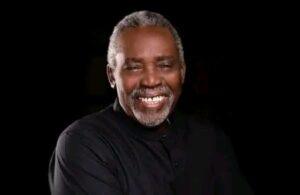
Six women influenced my growth on screen, stage -Chris Iheuwa
Veteran actor and director Chris Iheuwa, took us on a journey of his acting career, the women that played major roles in influencing his passion for movie and stage productions.
Currently based in the UK, Iheuwa also talked about his 9-5 job and his one-man stage production ‘Second Thoughts’, in this exclusive interview with ORJI ONYEKWERE.
Let’s talk about one of your productions Dedan Kimathi. Tell us about it, who co-produced the play with you.
Dedan Kimathi is a story of revolution and resistance against the British government in Kenya towards their independence. Before then, Nigerian is fortunate not too have witnessed too much apartheid or tribal militias for reasons I cannot explain.
Other countries went through militias battle with the British like South Africa and Rhodesia that we know today as Zimbabwe and even Kenya. It’s in Kenya that you had the Mao Mao uprising. Sedan Kimathi is a freedom fighter who was a revolutionist against the British government. He was caught. There was phony trial and judgement and he was sentenced to death by the British government.
That’s a major a story. So, it’s similar to the June 12 championing in Nigeria. They mark it annually. In doing that, the British Council in collaboration with the African Centre and University of Bradford Theaters Arts department known as Theaters In The Mill collaborated to have a two nation, three cities programme. Britain and Kenya.
They invited me to be the director of the programme. Apart from featuring in the programme, I was also a director and one of the whites in the court. I directed it and we have the core actors at Thearters in the Mill in Bradford.. You had the court room and the choir in Kenya, then the audience who were court members based in London. It was three cities, two nation programme.
I did my programme in film making at the University of Bradford Department of Engineering. In London at the British Council, we had the audience, they formed the audience for the trial. In Nairobi, Kenya, you have the choir and the African contingent in the court room. Those days, you had the segregation where black and white people seat differently. Most of the whites sat in London and most of the black sat in Kenya including the members of the choir.
Were there other prominent Nigerian actors that featured in the production?
The only person I will say is prominent is Daniel Okezie. We both featured in some Nigerian movies back in Nigeria before we found ourselves in the UK. The other person is Tope Dada who is a gospel singer based here in the UK.
Which job are you doing currently in Britain?
Currently, I work with the National Health Service, NHS. That’s my 9-5 job. However, I also do stage plays and features in fringe theatre. It’s a one-man stage performance. I wrote about the travails of migrants in the UK. I take it from town to town putting it on stage. In the month of May and June, I had six performances in some parts of UK. ‘Second Thoughts’ is the name of the drama.
The movie La femme Anjola, is it French? Do you speak French?
I don’t speak French, but the film is French. The title of the film is La femme Anjola, which is Lady Anjola. My French is very scattered
Let’s talk about your book “Ikemba Na Abia” inspired by Samuel Beckett book ‘Waiting for Godot. Give us a summary of the book.
Well, if you have had the time to read Samuel Beckett, ‘Waiting for Godot, it’s all about man’s insatiable taste for things. It’s almost like the proverbial teaching – a man how to fish, but he doesn’t know how to fish. He is always relying on handouts. But this story, we looked at from the African perspective particularly the Igbo background.
The book talks about two men standing and waiting for a boss to come and give them a job, when they had opportunity of working for themselves. However, they were still hopeful of someone coming to employ them. Fortunately, there are signs indicating that this man will not come because he keeps sending his servant to go and tell this guy’s that he will not come.
He keeps postponing it and tomorrow never came. Unless you put your hands down and start working for yourself, if you keep waiting for someone to come and give you something to do, that thing you are waiting for might not happen. Go out there and be self-reliant, resourceful.
That’s what it means. “Ikemba Na Abia”. You keep waiting for someone to help you solve your problem, you have to solve it yourself.
Even from the Nigerian point of view, where every case of disaster, we run to the UK or USA, Canadian, Germany, France High Commission complaining that our politicians are doing this or that. Who told you they are going to help and what makes you think they are not happy in the position you have found yourself. What gives you the impression that even if they come, they will ameliorate your problem
Is that why you hate borrowing?
I spent about 8 years in the bank in Nigeria. I first joined the bank as a product manager and then unit head of consumer goods. This means I was in charge of salary- loans with which you can buy cars, house, household goods and all that. The bottom line is anything to makes you feel comfortable as long as you are working. But, why it’s a good thing to borrow because it solves your immediate problem on the long run, it puts you a peculiar problem.
You will say you want ₦10,000 and your purse is filled with money. It’s not your money, but a borrowed sum you are supposed to pay back in 10 years. Every 1000 per year will be #1,300 per year. The mentality of borrowing from that stand point is not convenient, but people borrow and they make full use of it.
Everyone knows that Dangote is a multi-billionaire in dollars, but he also borrows. Nigeria with its multi trillion investment, still borrows. It’s not the borrowing that matters but what you do with the money borrowed. What are the terms for the return of the borrowed money, the principal and the interest. If I have my way, I will say don’t borrow.
Your near kidnap experience. Did it happen or it was a movie script?
The popular saying that If you don’t want an average African to know something, put it inside a book is what played out here. The original text on that write- up is on my face book. When I wrote that thing, I was on stage with Biodun Steven and we took a picture because of the movie we were shooting titled ‘Chaos Calling’, where she played my partner, It featured Kunle Remi and others. So, when I saw the picture, it inspired me to write a story about kidnap. That thing took me 8 hours to write and it was on my phone.
It was a story I wrote and at the end of the story, I credited the photographer who took the picture and with a caveat that this is a story. But some mischief makers picked up the story, published it verbatim and omitted the element that said it was a story. They also refused to credit the photographer
It caused some major issues back in Nigeria the and most of my friends, in Nigeria and outside Nigeria called me then to find out if it’s true. I told them it was just a story. What I realised is that many of us read processed stories from some lazy journalists, who are lazy and they picked the ones that are very fictional and made it factual
I write stories. Stories about a lover boy befriending a soldier’s wife and others. I will continue to write; I am a writer. I won’t stop.
From featuring in the movie Rattlesnake to Village Headmaster. What has been your biggest achievement as an actor?
I will look at it wholistically as a combination of projects. This discussion we are having today is as a result of some of the projects I have done over the years and the fact that in every job I do, I try to put in my best. There are some projects that always stand out for me.
For instance, I will always call out six ladies for helping shape my career. The first person is my mum. Back in the days, she helped to form my artistic enthusiasm and background. The first inspiration was when I attended a stage production during the FESTAC 77 at the National Theatre I watched the presentation of Langbodo (The Play): An adaptation of Daniel O. Fagunwa’s adventure narrative of Forest of a Thousand Demons. The play was written by Wale Ogunyemi and directed by Ulli Beier. Ipi Ntombi, a world-famous, South African musical and dance celebration. Then Isibru Ekperi, written by the renowned author Elechi Amadi staged by Lari Williams and his company Larry Williams. Larry Williams and Nelly Uchendu sang the popular song, “if you want to marry a husband, don’t marry a waka about’.
I was fortunate to be there when these productions took place at the National Theatre, Lagos. That carved a niche in my head, body and soul. Thereafter, I said I will always find myself on stage.
Later in life, there was another Tosin Oloyewole. She worked with NTA and had a TV Programe where myself, late Frank Dallas, Abubakar Muhammed – the current AGN President, were featuring in her plays – It was like a travelling theatre, where we would do plays for birthdays and all other engagements and it was a weekly affair.
This groomed me in terms of the business angle. Much later, I worked with Amaka Igwe as an actor, later a production manager and then an assistant director in Fuji House of Commotion. I was an actor on Checkmate and casting director for Violated, Americana and another movie. I learnt a lot from her.
Another woman is the director of La Femme Anjola – Mildred Okwo and recently Biodun Steven because she gave me the platform to be myself. There are directors who would call you and say, do this, do that. But she hardly ever directs me because she trusts in what I can do. She always call me until I left the country. When we do production, she will say how much do I give you for this. I will say give me this, and she hardly argues; she pays.
On this particular occasion, she gave me the script and asked me what I will like to take. I said, we are always discussing money, just pay me what you feel will be good for me. As at that period, that was the highest sum any living human being ever paid me for any production as at that time. That raised my bar with regards to how much I earn in movies.
Mo Abudu is another lady I worked with mostly on consultative bases. I handled security for movies and police liaison. But she said, I want you to play another role which is Chief. She gave me the script; I read it because it marked 10 years of my working with Nse Etim- Ekpe.
10 years ago, we worked on Kunle Afolayan’s movie ‘Phone Swap. 10 years before, she played my girlfriend, 10 years after she is also playing my girlfriend in a different project, thanks to Mo Abudu. I do not think I will rule out calling Mo Abudu as one of those that helped carved the niche in my movie growth. I hold them plenty of respect.
You have been at the backstage in stage productions and behind the camera in movies. That seems to have reduced the number of movies you have done. Is that true
That’s true. Remember I told you I worked with Amaka Igwe and she taught me a lot, featuring in Checkmate and Fuji House of Commotion. Thereafter she made me the production manager and after that I got promoted to assistant director on Fuji House of Commotion.
Most of the projects I have always been involved with are usually behind the scenes, but it doesn’t stop the fact that I am a very good actor. That’s what MO Abudu saw and say she would want to feature me as a Chief.
I have done more behind the screen than in front of the camera. Another project I did with Mo Abudu is Blood Sisters. I was security and police consultant, but also played the role of Uncle to one of the ladies.