Nigeria’s transformation under Tinubu unstoppable – Presidency
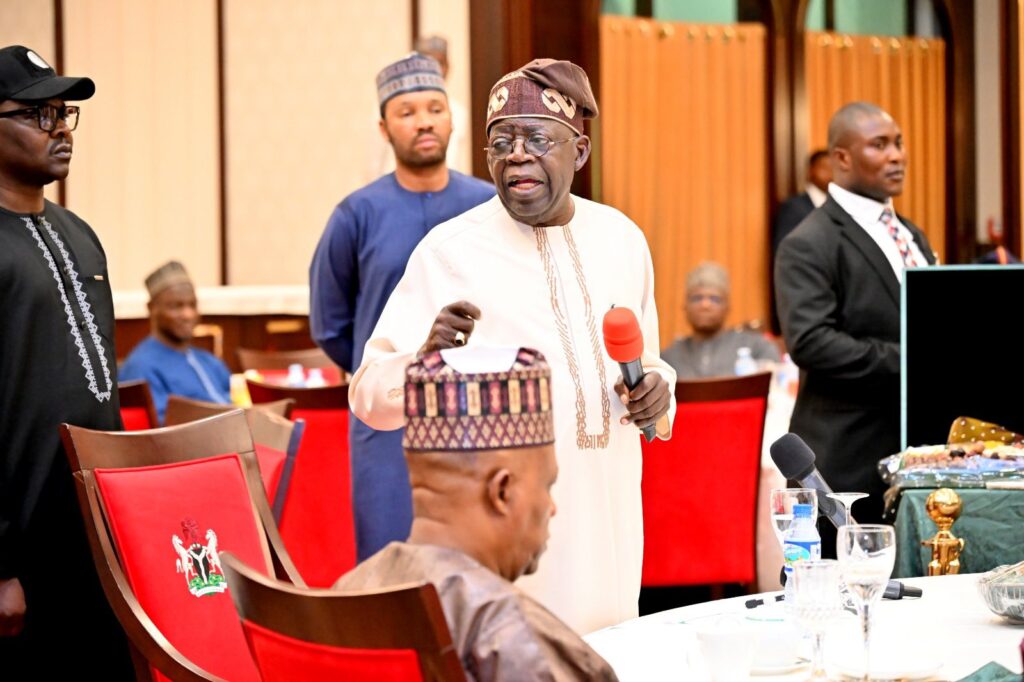
State House dinner at Ramadan
The Presidency says Nigeria’s economic and institutional transformation under President Bola Tinubu is unstoppable, in spite of criticism of his administration’s policies.
Mr Sunday Dare, Special Adviser to the President on Media and Public Communications, stated this in a statement issued on Tuesday.
The statement, titled ‘Beyond the Economist Condescension: Nigeria’s Re-Engineering Under Tinubu is Unstoppable,’ responded to a publication by The Economist.
The magazine had published an article titled ‘Nigerians dislike their President, but may re-elect him anyway’.
Dare described the publication’s portrayal of Nigeria as inaccurate and reflective of opposition narratives that failed to capture the country’s complex realities.
He said foreign commentators often reduced Nigeria’s challenges to sensationalist narratives of widespread despair and rejection of Tinubu.
According to him, the narrative that Nigerians “dislike” Tinubu overlooked efforts to address longstanding structural weaknesses in the economy.
Dare said Tinubu inherited an economy burdened by fuel subsidy, multiple foreign exchange windows and high debt-service obligations.
He said the administration had confronted the challenges through reforms aimed at restoring fiscal sustainability and repositioning the economy for growth.
“Far from presiding over stagnation, the Tinubu administration has systematically dismantled decades of economic distortion through a series of hard-core, visionary policies,” he said.
Dare said the removal of fuel subsidy had stopped significant leakages and enabled government to redirect resources towards productive development.
He also cited the rationalisation of the foreign exchange market as a measure that had reduced systemic arbitrage and strengthened investor confidence.
The presidential aide said implementation of the Nigerian Education Loan Fund had enabled hundreds of thousands of indigent students to pursue higher education.
He also highlighted financial autonomy for local governments, describing it as a step towards bringing governance and development closer to communities.
Dare said the increase in the national minimum wage, targeted palliatives and deployment of compressed natural gas buses had helped cushion economic pressures.
He said government interventions in agriculture, including fertiliser distribution, agro-loans and modern farming equipment, were supporting food production.
Dare explained that the benefits of the reforms were being experienced by students, workers, farmers and local government stakeholders across the country.
“These citizens recognise a leader doing the heavy, foundational lifting—someone cleaning up decades of accumulated governance debris,” he said.
Dare acknowledged Nigeria’s security challenges and exposure to global economic pressures but said such complexities should not be reduced to narratives of helplessness.
He described Tinubu as a “master strategist” whose policies had placed Nigeria on a path towards sustainable growth, fiscal independence and prosperity.
Dare said the narrative of inevitable rejection was being challenged by what he described as tangible gains from the administration’s reforms.