FEC approves NYSC reform, agency to be civilian-led, skill-oriented
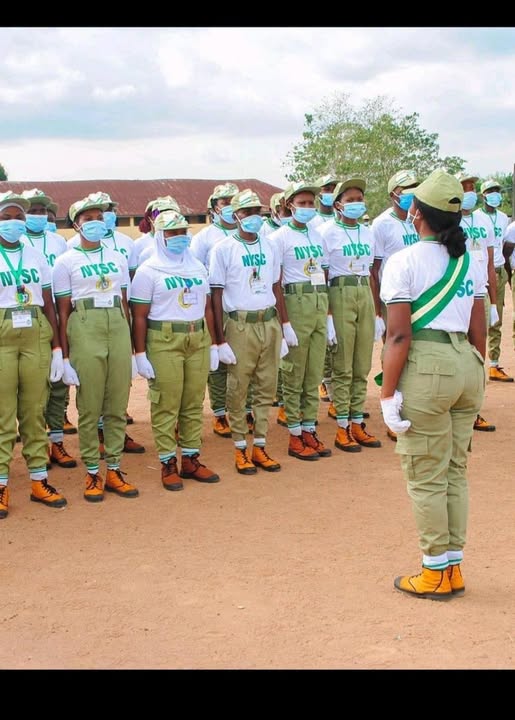
NYSC
The Federal Executive Council (FEC), on Monday, approved a comprehensive reform of the National Youth Service Corps (NYSC) to align the 53-year-old scheme with Nigeria’s current development priorities.
As part of the approval, FEC directed the Attorney-General of the Federation and the Ministry of Youth to amend the NYSC Act and its regulations to reflect all the approved reform measures, enabling immediate implementation of the new framework.
Under the reform, the NYSC will be led by a civilian in its operational leadership, while the military will continue to handle security for corps members across the country.
This shift is intended to reposition NYSC as a skill-oriented, productivity-driven, youth-empowering institution that directly supports the administration’s ambition of building a $1 trillion economy.
Mr Ayodele Olawande, Minister of Youth Development, disclosed these while briefing State House correspondents after the FEC meeting presided over by President Bola Tinubu.
He said the reform followed a comprehensive review undertaken by the Federal Ministry of Youth Development and other relevant stakeholders.
According to him, the review was conducted in collaboration with the Federal Ministries of Education and the Office of the Special Adviser to the President.
Olawande said the reforms were designed to reposition the NYSC beyond mobilisation into a platform for skills development, employment and national growth.
“We want to build an NYSC beyond just mobilisation. We are looking at strong partnerships for skill development, job creation and national growth,” he said.
The minister said the reforms would strengthen digital operations, improve the welfare and security of corps members and address emerging national priorities.
“The key reforms include digital transformation, self-development for corps members, security and attention to special issues,” he said.
He said the framework also provides for the upgrading of orientation camps through stronger collaboration with state governments.
“We want every state to have standard orientation camps for our young people,” Olawande said.
The minister added that the passing-out parade would be redesigned into a formal graduation ceremony to reflect the skills and competencies acquired by corps members.
“The passing-out parade should be redesigned from just a parade to a proper graduation ceremony,” he said.
He also disclosed that the reform would introduce a strengthened professional identity for corps members and review the NYSC Act to support the new framework.
Also speaking on the reform, Mrs Hadiza Bala Usman, Special Adviser to the President on Policy Coordination and Head of the Central Results Delivery Coordination Unit (CRDCU), said that there was a need to intervene to build the present ambition of a $1 trillion economy by repositioning the NYSC as a civilian-led, skill-oriented, productivity-driven, and youth-empowering national institution.
“These, we need to strengthen the human capital development to enhance the workforce that is needed for us to promote and align with our national development.
“The reform areas speak to all the strategic aspects of NYSC, starting from the area of the main area of deployment. How are you registering in the NYSC? What modality is being used to post you to several states? How are we recognising the areas where we have security challenges? What constitutes the period with which youth corps members are in camp?” she explained.
Bala-Usman said that the government looked to see what needed to be done to recognise people’s skill set, to recognise what it is that Nigeria needs from the Nigerian youth after graduating.
“We’ve segmented the NYSC across 11 different core streams. We have looked to see what are the areas that exist for Nigerian youth that Nigerian youth are interested in. So we looked to see how many streams can be done by stream, I mean the type of additional training we can provide you as a graduate, in having graduated from the university, so within the orientation camp, there is a new structure where you have the first two weeks, which speaks to laying a foundation on civic responsibility.
“You’ll be made aware of what it is that civic duties mean, our national values, leadership development. The next two weeks, we would look to career mapping, basic accounting literacy skills, business planning, and access to finance. How do we access finance? And then we intend to introduce a structured career day programme to enable corps members engage directly with the public.
“But importantly, the final two weeks, which is a minimal period, we intend to have a focused corps stream-specific training. This aligns with the corps members designated stream based on his choice, based on his academic background and skill profile. We’ve designated 11 core streams across NYSC,” she said.
The presidential aide said that when a graduate comes in as a youth corps member, they would be able to pick which stream they want to participate in.
She listed the streams to include the agric corps, medical corps, education corps, tech and digital corps, legal corps, public service corps, infrastructure corps, green corps, enterprise corps, creative economy corps, and paramilitary and security corps.
“So each corps member, once he’s in, once he has uploaded and he has been recognised and accepted as a corps member, he’s required to pick one of those corps, and once he registers in that, then we recognise him as a medical corps, and certain trainings will be given for each of those corps within the two weeks.
“What is important is Mr President, in his usual bold and courageous way, has taken on this holistic reform of the NYSC, which has never been done in the last 53 years of its establishment. NYSC will be civilian-led with clarity of the fact that we need to build the skill set of our youth to enable them function and support the government in building a $1 trillion economy,” Bala-Usman added.
The NYSC scheme was created by decree No.24 of 22nd May 1973 in a bid to reconstruct, reconcile, and rebuild the country after the Nigerian Civil war “with a view to the proper encouragement and development of common ties among the youths of Nigeria and the promotion of national unity”.