How Iran’s Ayatollah Ali Khamenei died
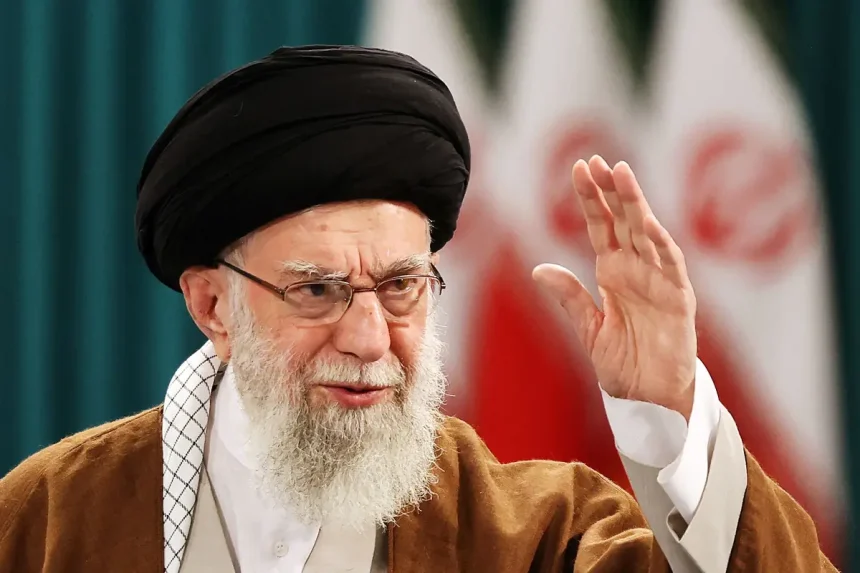
Ayatollah Khamenei
According to Associated Press, a major attack launched by Israel and the United States killed Iran’s Supreme Leader Ayatollah Ali Khamenei, President Donald Trump announced Saturday, confirming an assassination that he said gave Iranians their “greatest chance” to “take back the country” but that also put the future of the Islamic Republic in doubt and raised the risk of regional instability.
The strikes opened a stunning new chapter in U.S. intervention in Iran, marking the second time in eight months that the Trump administration had attacked the country during talks over its nuclear program. The reported killing of Khameini after decades in power appeared certain to create a significant leadership vacuum given the absence of a known successor and because the Supreme Leader had final say on all major policies. He led Iran’s clerical establishment and its paramilitary Revolutionary Guard – the two main centers of power in the governing theocracy.
In a nationally televised address, Israeli Prime Minister Benjamin Netanyahu said there were “growing signs” that the 86-year-old Khamenei had been killed when Israel struck his compound early Saturday. Shortly after the address, two Israeli officials said Israel had confirmed his death. The officials both spoke on condition of anonymity pending a formal announcement and gave no further details.
As reports trickled out about the death, eyewitnesses in Tehran told AP some residents were rejoicing, blowing whistles and letting out ululations.
Strikes followed months of rising tensions
The joint U.S.-Israel operation, which officials say was planned for months, took place Saturday during the Muslim holy fasting month of Ramadan and at the start of the Iranian work week.
As the attack on Iran got underway, Trump urged the Iranian public to “seize control of your destiny” by rising up against the Islamic leadership. In a video announcing the “major combat operations,” Trump told Iranians that “when we are finished, take over your government. It will be yours to take. This will be probably your only chance for generations.”
An Iranian diplomat told the United Nations Security Council that hundreds of civilians were killed and wounded in the strikes.
Iranian state media, citing the Red Crescent, on Saturday evening said at least 201 people had been killed and more than 700 wounded. Iran retaliated by firing missiles and drones toward Israel and U.S. military bases in the region, and exchanges of fire continued into the night.
About 12 hours after the attacks began, the U.S. military reported no U.S. casualties and minimal damage at U.S. bases despite “hundreds of Iranian missile and drone attacks.” It said targets in Iran included Revolutionary Guard command facilities, air defense capabilities, missile and drone launch sites, and military airfields.
Various members of Iran’s leadership were targeted in the attack. Israel said it killed the commander of the Iranian Revolutionary Guard Corps and the country’s defense minister. The Israeli military also said its strikes killed the secretary of the Iranian Security Council, a close adviser to Khamenei.
Some of the first strikes on Iran appeared to hit near the offices of Khamenei, the second leader of the Islamic Republic who succeeded Ayatollah Ruhollah Khomeini, the leader of the 1979 Islamic Revolution. Before Israeli officials confirmed the death, Iranian Foreign Minister Abbas Araghchi told NBC News that Khamenei and President Masoud Pezeshkian were alive “as far as I know.” He called the attack “unprovoked, illegal and absolutely illegitimate.”
Democrats decried that Trump had taken action without congressional authorization. White House spokesperson Karoline Leavitt said the administration had briefed several Republican and Democratic leaders in Congress in advance.
Tensions have soared in recent weeks as American warships moved into the region. Trump said he wanted a deal to constrain Iran’s nuclear program, as the country struggles with growing dissent following nationwide protests.
ranian state television said on Sunday that Supreme Leader Ali Khamenei was killed following U.S.-Israeli bombardment.
The broadcaster did not provide details about the circumstances of his death.
State media also reported that 40 days of public mourning were declared in Iran.
The Supreme National Security Council said Khamenei was killed at his office early on Saturday, and that his death would mark the beginning of a “great uprising against the tyrants of the world.”
Iran’s Revolutionary Guard Corps (IRGC) said it would “decisively avenge” Khamenei’s killing, stressing that “the hand of revenge of the Iranian people will not let go of the killers of the Imam.”
The IRGC said martyrdom in the path of Islam and “Greater Iran” represents victory and proximity to the ultimate goal.
It added that Khamenei’s path “will not stop after his martyrdom, but will continue with strength and grandeur.”
The statement urged all segments of society to take part in national defense gatherings to demonstrate unity and cohesion before “the enemies of the nation and terrorists.”
It added that the killing would make the nation more determined to continue what it described as Khamenei’s illuminating path.
U.S. President Donald Trump earlier on Saturday night wrote in a post on his social media platform Truth Social that Khamenei was “dead.”
“Khamenei, one of the most evil people in History, is dead,” Trump wrote.