NIPSS DG: Nigeria’s next democratic phase must deliver beyond ballots
NIPPS
Says strong institutions, inclusive growth, youth & women participation key to real democratic dividends
By Mathew Brangyet
Nigeria has survived 27 years of civilian rule. Now it must prove democracy can work, not just hold elections.
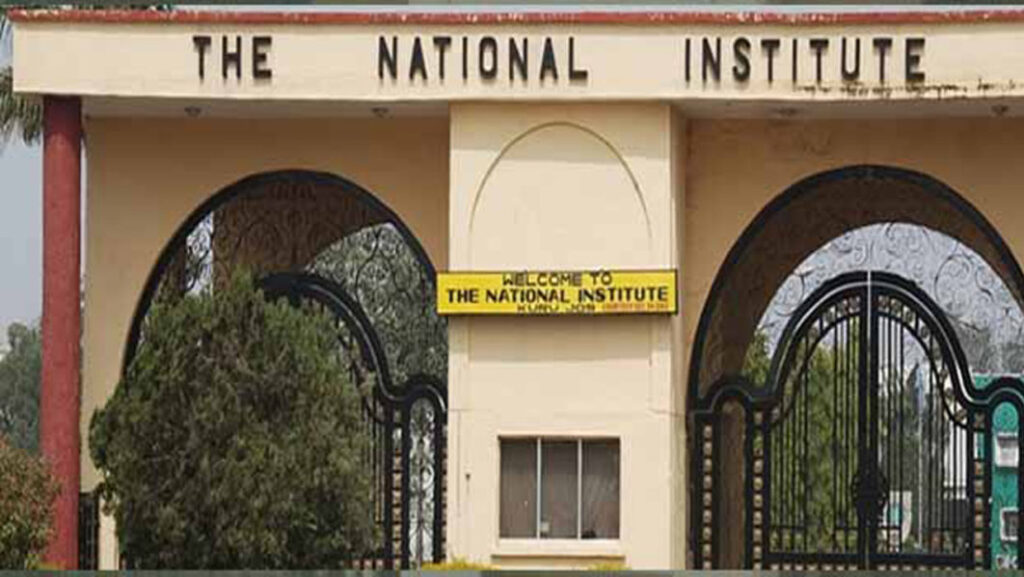
That was the message from Prof. Ayo Omotayo, Director-General of the National Institute for Policy and Strategic Studies, NIPSS Kuru, at the 27th Democracy Day Public Lecture on Thursday at the State House Banquet Hall, Abuja.
Omotayo said Nigeria had reached a turning point. “Sustaining democracy is no longer enough,” he declared. “Efforts must now be directed towards deepening democratic governance and improving citizens’ welfare.”
The NIPSS DG argued that Nigeria’s democratic future hinges on resilient institutions, not strongmen.
“The road ahead begins with strengthening institutions,” Omotayo said. “Strong institutions remain the bedrock of sustainable democracy. Our democratic future depends not on the strength of individual leaders alone but on the effectiveness, credibility and resilience of institutions.”
He listed judicial reforms, civil service modernisation, regulatory efficiency, and stronger accountability as urgent priorities. “Strengthening the rule of law will guarantee stable democratic governance,” he added.
Omotayo called for economic policies that translate GDP numbers into jobs and prosperity. He urged focus on industrialisation, agricultural transformation, infrastructure expansion, and support for small businesses.
“Economic growth must translate into broad-based prosperity for citizens,” he said.
Technology, he added, must be deployed as a tool for transparency. Digital governance, e-governance platforms, and open data, he argued, will improve efficiency and rebuild public trust.
The policy expert pushed for greater inclusion of youth and women in leadership. He urged lawmakers to pass legislation that boosts women’s political representation and consolidates gains from the Not Too Young To Run Act.
“Nigeria cannot attain its democratic and economic potential while significant segments of the population remain excluded from leadership,” Omotayo warned.
He also called for sustained investment in education, innovation, entrepreneurship, and leadership development to harness Nigeria’s youthful population, noting that nearly 70% of the 220 million population is under 30.
On security, Omotayo said democratic consolidation remains impossible without peace. He recommended combining military action with investments in education, jobs, and social inclusion to tackle root causes of banditry, terrorism, and kidnapping.
He also flagged corruption as a “menace that continues to undermine development and public confidence,” insisting the fight against graft must remain a national priority for government, civil society, and citizens.
Reflecting on Nigeria’s democratic journey since 1999, Omotayo described it as the longest stretch of constitutional governance in the country’s history. He cited the 2015 peaceful transfer of power from PDP to APC, growth of the media and civic space, telecoms liberalization, and GDP growth from $95.5 billion in 2000 to nearly $400 billion as democratic dividends.
But he admitted challenges persist: poverty, unemployment, weak public trust, electoral violence, and vote-buying. He expressed optimism that recent reforms and youth-focused programs like the 3 Million Tech Jobs initiative and SkillUp Nigeria would deliver results.
Omotayo’s closing charge mirrored President Tinubu’s third-anniversary message: democracy must be felt at kitchen tables, not just in statistics.
“The task before us is not merely to sustain democracy but to deepen it. Not merely to protect democratic institutions but to strengthen them. Not merely to conduct elections but to ensure that democratic governance delivers tangible benefits to every citizen,” he said.
He urged Nigerians to build consensus through dialogue and compromise, and congratulated President Bola Tinubu and citizens on 27 years of uninterrupted democracy, declaring that “the country’s democracy remains alive and resilient.”