Tinubu to Atiku: Your plan to reverse subsidy removal is ‘serious ignorance on economy’
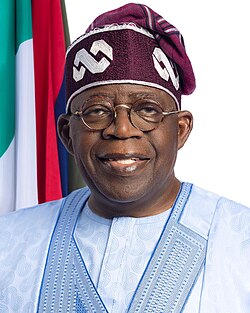
Bola Tinubu
.Says before he assumed office, 27 states were unable to pay salaries, not to talk of pensioners
.Your petrol subsidy plan retrogressive, driven by desperation for power, Onanuga replies Ex-VP
Emeka Agu with agency report
President Bola Tinubu has maintained his stance on the removal of the fuel subsidy by his administration, saying that the call for the reversal of the policy by former Vice President Atiku Abubakar and the presidential candidate of the African Democratic Congress (ADC) is a “demonstration of serious ignorance on governance and the economy”.
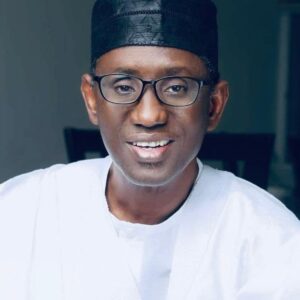
Recall that former Vice President Atiku Abubakar, on Wednesday, said he would restore the petrol subsidy if elected president in 2027.
He said: “If elected, I will bring back the oil subsidy, and whoever stole the money must refund it.”
Atiku said the removal of the petrol subsidy could have been justified if the savings had been channelled into development projects across the country.
However, President Tinubu on Thursday defended the subsidy on petrol when he received the Osun State Governor, Ademola Adeleke, at the Presidential Villa.
Speaking while receiving Adeleke in his office, Tinubu said: “Let’s look at the trajectory of history. I saw one of my opponents now say he will go back to subsidy. I read it. That is a demonstration of serious ignorance about governance and the economy. Before I came here, 27 states were unable to pay salaries, not to even talk of pensioners. In your state, I know a man that I raised who is nicknamed ‘half salary.’
“They come to the federal government cap in hand, unable to do anything. Salaries you pay for each family. They were at the local governments. They are in the states. We are at the concentration of population. They are in the states.”
The President said ordinary people and their families now feel the impact of government through the provision of infrastructure: good road networks, housing, school rehabilitation, hospital and healthcare resuscitation, and the training of teachers and health workers to protect vulnerable families.
President Tinubu advised the Governor to build a network of unity and unified tools, and everything required for governance.
“Like I said, you did not conquer anybody.
“You won the election. That is the essence of democracy. I’m so happy that we had this talk. All for the reconciliation — expand your coast. That is the only way you can give thanks to our people. Not the way you sang it or celebrated it.
“It’s the way you act. Use me as an example. And I got here. God put me here. Where you are today, God put you there. Not the smartness of any of these people.
“It’s just their support, not their smartness. It’s the wish of God that prevailed and the wish of the people for you. And you are in a very, very unique position to make history, promote unity, peace, and stability.
“Use it. It started as a progressive. All you are doing now is progressive instinct. And you did a very good mobilisation with your team. Very good job. You saw fear. You screamed. Promote democracy. Promote stability. Promote the rule of law. Don’t stigmatise any of your opponents,” Tinubu told the governor.
Speaking to journalists, the Osun State Governor said: “I’m here to thank Mr. President, the father of the nation, because he fought for this democracy.
“That is why he allowed a free and fair election, and that is the result. That is why I’m here — to say thank you and to ensure that democracy lives in Nigeria.”
In a related development, Mr. Bayo Onanuga, special adviser to President Bola Tinubu on information and strategy, has described former Vice-President Atiku Abubakar’s proposal to restore petrol subsidy if elected president in 2027 as “retrogressive”, accusing him of making the promise out of desperation for power.
He said the proposal would return Nigeria to a subsidy regime that was “wasteful, corruption-ridden and financially burdensome”.
In a statement on Thursday, Onanuga said Atiku is entitled to propose alternative policies but argued that Nigerians deserved to know how his proposed subsidy would be funded and implemented under the current petroleum-sector framework.
He said Atiku’s position represented a reversal of his previous stance on petrol subsidy, noting that the former vice-president had advocated the removal of the subsidy before the 2023 presidential election.
“It is not difficult to explain why Atiku has latched onto the abandoned subsidy regime, five months to the election,” Onanuga said.
“Desperate for power, he needed to make a promise that he knew, if he were candid with our people, does not make fiscal sense, is retrogressive, and is against the genuine interest of the people.”
The presidential aide disputed Atiku’s claim that the federal government had failed to account for about N30 trillion in savings and revenues from subsidy removal.
Onanuga said the N30 trillion figure did not represent subsidy savings, describing the former vice-president’s claim of a subsidy windfall as unfounded.
“Contrary to Atiku’s claim in his interview, no N30 trillion subsidy windfall or savings exists anywhere except in his imagination,” he said.
Onanuga said the subsidy regime involved the Nigerian National Petroleum Company Limited (NNPC) absorbing the difference between the cost of petrol and the regulated pump price, resulting in substantial costs to government.
He said the Petroleum Industry Act (PIA) established a framework for ending the subsidy regime by June 2023, adding that Tinubu only accelerated the process by a few weeks after assuming office.
He added that Nigeria’s petroleum sector had changed significantly since the removal of subsidy, particularly with the emergence of substantial domestic refining capacity.
Onanuga cited the Dangote Refinery as a major development that had altered the country’s dependence on imported petrol.
He argued that restoring the old subsidy system could undermine local refining and place smaller domestic refineries under financial pressure.
According to him, Nigeria is increasingly moving from reliance on imported refined products towards domestic refining, with potential benefits for energy security, foreign-exchange conservation and job creation.
“The subsidy debate must therefore be grounded in the realities of today’s market rather than treated as though Nigeria’s petroleum sector has remained unchanged,” he said.
Onanuga challenged Atiku to explain how much his proposed subsidy would cost and where the money would come from.
“If petrol is sold below its economic cost, which is about N1,200 to N1,300, someone must absorb the difference,” he said.
“Ultimately, that cost falls on the public finances—through reduced funds for infrastructure and social services, reduced allocation to states and 774 local councils, increased borrowing, higher public debt, or some combination of these.”
The presidential aide said the government recognised the hardship caused by higher petrol prices but argued that sustainable relief should not involve recreating a fiscal arrangement that previously placed significant pressure on public finances.
He cited the government’s compressed natural gas (CNG) initiative as an alternative aimed at reducing transportation and energy costs.
Onanuga urged Atiku and other political actors to provide clear fiscal and legal details for any proposal to restore petrol subsidy.
“Political promises must be backed by fiscal arithmetic,” he said.
He asked Atiku to explain the annual cost of the proposed programme, its funding source, whether the government would borrow to finance it, and whether amendments to existing petroleum-sector laws would be required.
“Nigeria cannot afford to return to policies whose costs are hidden from citizens until they appear later as debt, reduced government spending on social services, and further pressure on the national currency,” he said.