Why more Nigerians fell into poverty under Tinubu -Presidency
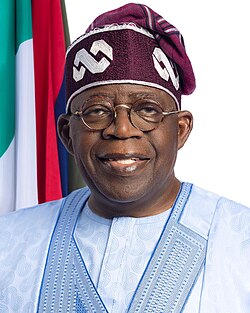
Bola Tinubu
Says significant progress has been made since President’s economic reforms were introduced
Predicts that Tinubu would widen his margin over opponents in 2027
Emeka Agu with agency report
The Presidency, on Wednesday, explained why more Nigerians fell into poverty under President Bola Tinubu’s administration.
The Presidency listed the economic reforms of the Tinubu administration as reason for increased poverty among Nigerians, insisting however that significant progress has been made since the reforms were introduced.
The Special Adviser to President Bola Tinubu on Policy Communication, Daniel Bwala, stated this during Channels Television’s Politics Today programme on Wednesday while defending the reforms introduced by the Tinubu administration since it assumed office in 2023.
The reforms, which included the removal of petrol subsidy and the unification of the foreign exchange market, triggered a sharp rise in the cost of living, with households and businesses facing higher transportation, logistics and production costs.
The Federal Government has consistently defended the measures as necessary to address long-standing economic distortions and reduce pressure on public finances.
The government has also argued that the reforms have begun to produce economic gains. In his October 1 Independence Day address, President Tinubu said inflation had fallen from its peak, foreign reserves had been rebuilt and the foreign exchange market had stabilised, while describing the country as having reached a turning point from reform to prosperity.
Bwala, however, acknowledged that the immediate impact of the reforms was painful for many Nigerians.
Asked whether more people had been thrown into poverty by the current administration, he said: “Do you know why? It is simply because we took a reform. There is no part of the world where reform comes with convenience. The population is 230 million, already at some stage of poverty. But we can’t make any progress until reform is carried out. None of the presidents that came before this president had the courage to do it because of fear.
“But the president said we can’t make any progress. So, he took that reform. Please let it be clear, even to the opposition. The reason why you have this number of poor people, and some of these doomsday analyses that people are giving, is because we undertook a reform. There is no part of the world where you start a reform like that, and there will not be discomfort. More people went down to poverty. I acknowledge it, I’m not doubting. But, there is a but to it. Since the reform started till today, we have made marked progress, which is what we have spent the last three years doing.
“So, you cannot discount that even though there are quite a number of our population that are poor which we admit, but we have made progress so far”.
On 2027 presidential election, Bwala expressed confidence that President Tinubu will perform better than he did in 2023, when he defeated Atiku Abubakar by 1.81 million votes and Peter Obi by 2.69 million votes.
The presidential adviser predicted that Tinubu would widen his margin over his opponents in the next election.
“Let me tell you and let me say it categorically and I will be happy to come back. The margin of gap that President Bola Tinubu will give each and every one of these candidates will be so much that you won’t believe it,” he said.
Bwala also faulted a report by The Economist on Nigerians’ dissatisfaction with Tinubu’s performance, describing it as watery and lacking substance.
Recall that The Economist on October 1 in a report said President Tinubu might win the forthcoming 2027 polls despite public discontent.
The report, titled: ‘Nigerians dislike their president, but may re-elect him anyway’, identified a worsening security crisis, the biting effects of the economic reforms and popular political challengers as factors that could work against the president’s re-election bid.
Reacting to the report, Bwala questioned the research methodology of the report.
Bwala said: “Let me say that The Economist’s theory, as published, is watery. It doesn’t have the substance. If you want to write an opinion piece, and especially when you want to rely on data, you want to make a claim on the data, the first thing you should do is to conduct a survey. There would be some people who don’t like him (Tinubu), but there are others who like him.
“In other words, in democracy you have to allow the two voices to speak. When you make a claim that Nigerians don’t like him (Tinubu) without also saying that there are a lot of people, for example, one million families whose children have benefited from Nigerian Education Loan Fund, NELFUND, do you think they hate him? If you look at the agricultural sector in Nigeria, the kind of incentive and benefit they got, do you think they hate him? What about the incentive for the manufacturers in production?”