Presidency, Obi clash over call for Tinubu’s resignation
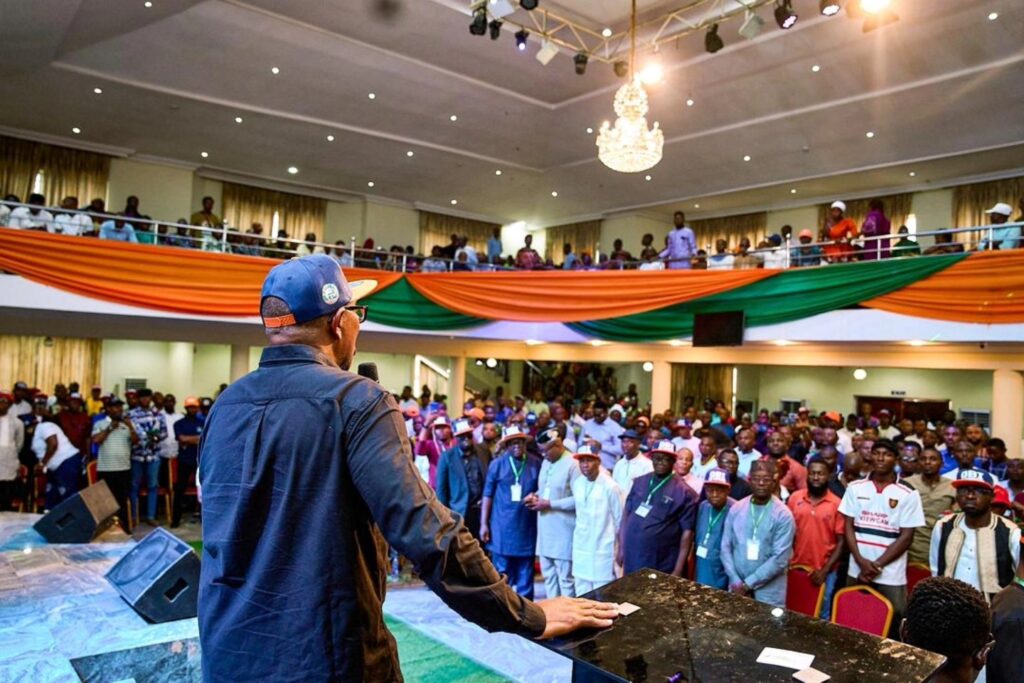
Peter Obi
Ex-Anambra gov cites worsening economic hardship, insecurity, declining living conditions across Nigeria as reasons for his call
Your call misplaced and based on selective interpretation of developments in Nigeria since 2023-Presidency replies Obi
Emeka Agu Jnr with agency reports
The Presidency and the Presidential candidate of the Nigeria Democratic Congress (NDC), Mr. Peter Obi, have sharply disagreed on the latter’s call on President Bola Tinubu to resign from office.
Obi in a statement posted on his X handle on Monday called on President Tinubu to resign over what he described as a “monumental failure in governance,” citing worsening economic hardship, insecurity, and declining living conditions across the country.
The former Anambra State governor made the call after reflecting on the resignation announcement by the British Prime Minister, Keir Starmer, which he said underscored the importance of accountability in public office.
According to Obi, the British leader’s decision to step down amid public dissatisfaction with economic conditions and unmet campaign promises offers lessons for countries seeking to strengthen democratic governance.
Drawing parallels with Nigeria’s situation, Obi recalled that before becoming president, Tinubu had repeatedly demanded the resignation of former President Goodluck Jonathan over insecurity and economic challenges facing the country.
“Before 2015, our President on several occasions championed the call for the then President Goodluck Jonathan to resign over economic hardship and insecurity affecting Nigerians. During the Chibok School kidnapping incident, he demanded the immediate resignation of President Jonathan, arguing that the government had failed in its most fundamental duty of protecting lives,” Obi stated.
He also referenced commitments made by Tinubu during the 2023 presidential campaign, particularly on electricity supply, anti-corruption efforts, and improving citizens’ welfare.
“During the 2023 election campaign, President Bola Ahmed Tinubu made several promises, including improved electricity supply. He also challenged the electorate not to vote for him for a second term if he failed to deliver on those commitments—particularly in providing stable power, fighting corruption, and improving the welfare of Nigerians,” the former Anambra State governor stated.
Obi further argued that conditions in the country had deteriorated since Tinubu assumed office, saying critical sectors had witnessed setbacks rather than progress.
“At present, however, these conditions have worsened. Electricity supply remains unreliable, insecurity has intensified in many areas, including kidnappings, and economic hardship has deepened rather than eased. Similar concerns are reflected across other critical sectors such as security, infrastructure, transportation, and anti-corruption efforts, all of which have regressed. We are in the worst possible condition,” he said.
The presidential candidate said the situation warranted accountability at the highest level of government and urged the President to step aside.
“I, therefore, join Nigerians of goodwill in calling for the resignation of the President over monumental failure in governance. Such a gesture would help enthrone a political culture rooted in accountability and responsibility, rather than further entrenching impunity.
“It would also send a powerful message that public office is a sacred trust, not an entitlement, and help build a society in which future leaders understand that failure carries consequences. Only by ending the culture of impunity can we secure a better future for the society our children will inherit in a New Nigeria that is possible,” Obi noted.
He also maintained that embracing accountability and responsibility in leadership remains essential to building stronger institutions and restoring public confidence in governance.
Reacting, the Presidency dismissed Mr Peter Obi’s call for President Bola Tinubu’s resignation, describing it as misplaced and based on what it called a selective interpretation of developments in Nigeria since 2023.
This is contained in a statement issued on Monday in Abuja by the Presidential Spokesperson, Mr Bayo Onanuga, who said Obi’s position failed to reflect the country’s constitutional and political realities.
Onanuga said Nigeria operated a presidential system of government, unlike the parliamentary system in the United Kingdom, making calls for resignation outside constitutional processes inappropriate.
He said that Tinubu was elected for a fixed four-year term and should be assessed by voters during the next presidential election rather than through social media campaigns.
According to him, recent electoral victories recorded by the All Progressives Congress (APC) in Ekiti and senatorial elections in Nasarawa, Enugu, Ondo and Rivers states indicate continued public support.
“Obi should wait until the presidential election to know what the people think of Tinubu’s government. Moving to use X to harangue the President out of office is off the mark and anti-democratic,” he said.
On security, Onanuga said Tinubu inherited longstanding challenges but had recorded measurable progress through intensified military operations and increased investments in national security infrastructure.
He said hundreds of kidnapped victims had been rescued, while more than 15,000 terrorists had been neutralised through sustained operations conducted across various parts of the country.
According to him, the administration has expanded security investments through the deployment of advanced technologies, drones and the appointment of a Special Adviser on Homeland Security.
“It is laughable that Obi, who, as governor, was a colossal failure, unable to secure lives and property in his small state of Anambra, is now calling for President Tinubu’s resignation over security breaches in some parts of the country,” he said.
On the economy, Onanuga said Obi’s description of Nigeria as being in its worst condition ignored available economic indicators and international recognition of ongoing reforms.
He recalled that Tinubu inherited what he described as a “dead horse economy” and introduced reforms that previous administrations had reportedly avoided implementing for years.
According to him, Nigeria has recorded positive Gross Domestic Product (GDP) growth every quarter since 2023, while trade surpluses and foreign reserves have continued to improve.
He said oil production had risen from less than one million barrels per day to about 1.8 million barrels daily, while federation revenue was projected to exceed N30 trillion in 2026.
Onanuga added that N15.7 trillion had already been generated by May 2026, more than double the total revenue recorded in 2022, boosting development efforts by sub-national governments.
He said the stock market had witnessed significant growth, with the All-Share Index rising from about 50,000 points to more than 250,000 points over the period.
According to him, the naira exchange rate has stabilised, while foreign direct and portfolio investments have reached record levels, particularly within the oil and gas sector.
The presidential aide also highlighted infrastructure projects, including the Lagos-Calabar Coastal Highway and Sokoto-Badagry Superhighway, as evidence of the administration’s development agenda.
He said Tinubu had also promoted the adoption of compressed natural gas (CNG) and facilitated interest-free education loans for nearly two million Nigerian students.
On industrial harmony, Onanuga said tertiary institutions had recorded no major disruptions from unions such as ASUU and NASU in the last three years.
Addressing electricity supply, he said critics had consistently misrepresented Tinubu’s campaign remarks, noting that the President signed the Electricity Act to decentralise the power sector.
He added that the administration had rolled out millions of prepaid meters, expanded off-grid solar projects and was addressing transmission and pricing challenges to attract investment.
While acknowledging the high cost of living, Onanuga attributed part of the economic pressure to global developments, including tensions in the Middle East and supply chain disruptions.
He described Obi’s resignation call as a political distraction, insisting that Tinubu remained focused on reforms, economic stability, improved security and long-term national development.
“True leadership means staying the course, learning, adapting and delivering results.
“President Tinubu has shown he is up to the task, and Nigeria is on the path to progress,” he said.
Onanuga added that Obi’s comments reflected what he described as a self-created narrative disconnected from realities on the ground, maintaining that the administration remained committed to delivering its mandate.