PRP, Falana pick holes in proposed creation of State Police
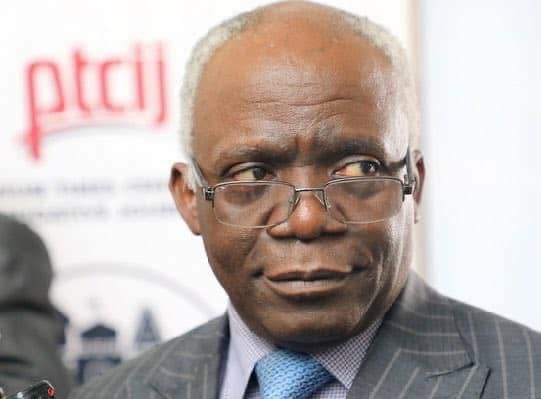
Femi Falana
Tinubu administration can’t be trusted with State Police, says PRPState Police won’t address
insecurity without tackling poverty — Falana
Emeka Agu Jnr with agency reports
The Peoples Redemption Party (PRP) and Human rights lawyer, Femi Falana, SAN, on Thursday, picked holes in the planned establishment of state police by President Bola Tinubu’s administration through a constitutional amendment.
The PRP in a statement signed by its National Chairman, Hakeem Baba-Ahmed, raised concerns over plans, saying the Tinubu administration’s credibility and competence were at an unprecedented low in Nigeria’s democratic history.
The party acknowledged the need for a major review and overhaul of Nigeria’s security, law and order institutions to address insecurity and strengthen citizens’ confidence in leaders and critical institutions.
However, it argued that the All Progressives Congress (APC)-led administration lacked the moral standing and public trust required to undertake a major restructuring of the country’s policing system.
“Going by precedent and record, this administration will almost certainly secure what is needed to amend the constitution and actualize its desire to establish State Police,” the statement said.
“While Nigeria needs major review and overhaul of its security and law and order institutions to address national security and create an environment that should raise citizens’ confidence and faith in leaders and critical institutions, this administration lacks the moral assets and the trust of Nigerians to undertake a major shift in the policing structure of the country.
“The APC administration has failed to manage our security structure and institutions. Its plan to engineer the emergence of State Police is suspicious and it should be rejected.”
The PRP said the forthcoming election should serve as a test of credibility and popular acceptance before the country takes decisions on major issues such as the creation of state police.
It also urged the Federal Government to intensify efforts to secure citizens and bring an end to the insecurity facing the country.
In his intervention, Human rights lawyer, Femi Falana, SAN, warned that the creation of state police will not resolve insecurity in Nigeria unless the government addresses poverty and unemployment.
Falana, who appeared on Channels Television’s Politics Today on Thursday, said the country’s insecurity challenge was often narrowly reduced to questions of security architecture, without adequate attention to social security and the conditions driving young people into crime.
“We always reduce the problem of insecurity to security architecture, in fact structure. How do we have more police stations? How do we employ more policemen and women without considering social security?” Falana queried.
“Why are more young men taking to criminality? Why are we not talking about creating employment for young people? Why are we not giving assistance to Nigerians that are vulnerable, extremely poor or dimensionally poor? And unless you address these problems holistically, creating a state police or local government police will not address the crisis of insecurity in the country.”
Recall that President Bola Tinubu on Tuesday transmitted to the Senate a bill seeking to amend the 1999 Constitution to provide for the establishment of state police services across the federation.
The Senate passed the bill on Wednesday after Senate Leader Opeyemi Bamidele presented its general principles. The bill subsequently scaled second reading, was considered clause-by-clause and passed third reading, with more than two-thirds of senators voting in support.
A key provision of the bill empowers state governors to appoint commissioners of police for their respective states, subject to confirmation by the state Houses of Assembly.
Lawmakers also incorporated safeguards aimed at protecting political freedoms and civil liberties, in response to concerns about possible abuse of the proposed policing structure.
Falana said regional police was not new to Nigeria, noting that the country operated a decentralised policing system during the First Republic.
However, he said the system was abolished due to what he described as the gross abuse of police powers by regional leaders.
He said Nigeria must address the issues that led to the abolition of the dual policing system if it intends to return to it.
“If we now want to go back to the status quo ante bellum, we must ask questions. The fears that were entertained, the problem that led to the abolition of the dual policing system, have they been taken care of? I haven’t seen any signs. I have seen the bill passed by both chambers of the National Assembly, the bill is so sketchy,” he said.
Falana also raised concerns about checks and balances in the operation of state police, as well as the ability of some state governments to fund the proposed police services.
He said some state governments could barely pay salaries and pensions.