WTD 2026: My crown opportunity to inspire young people -Omega Richard (Miss Tourism Africa Nigeria
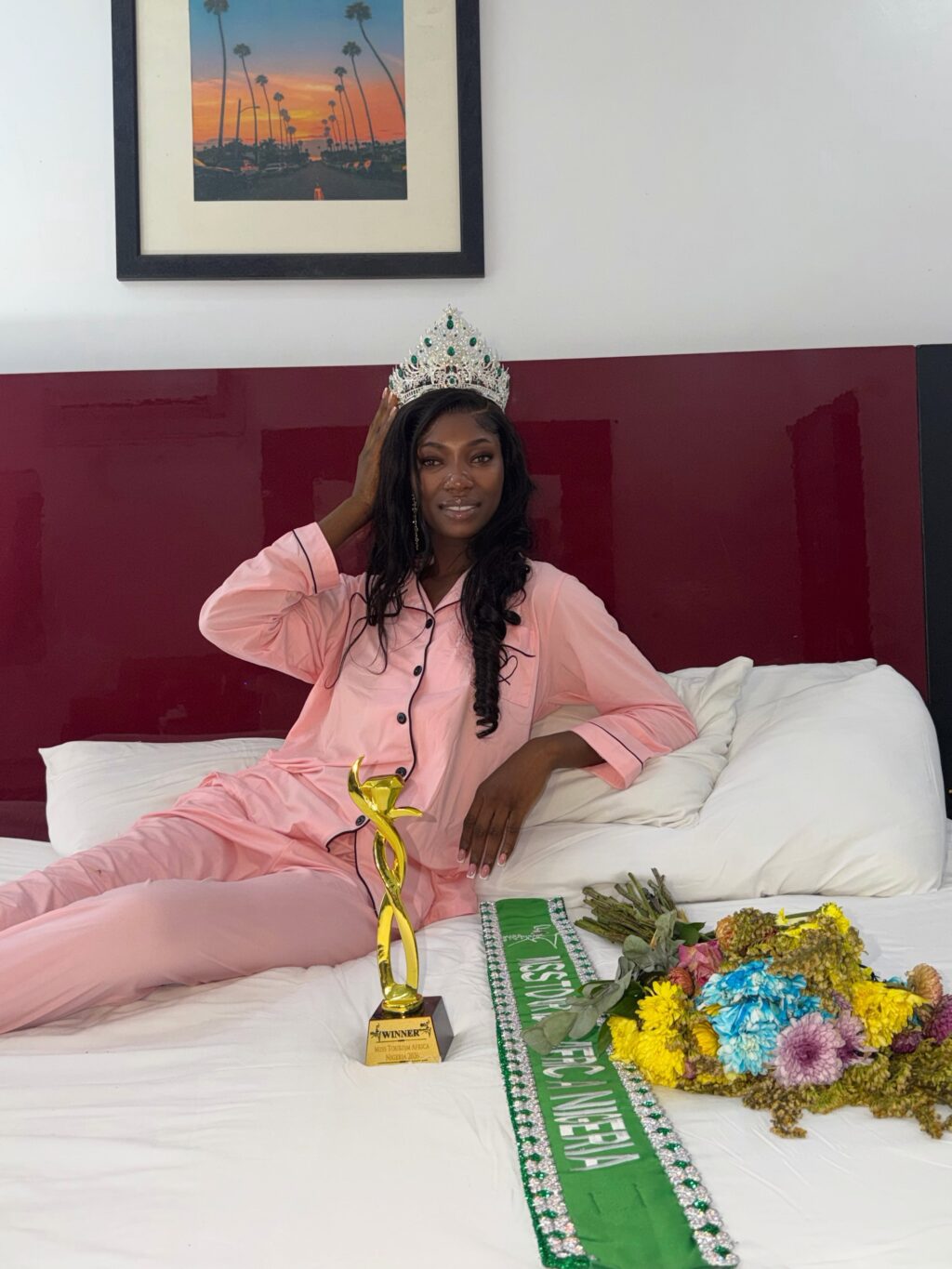
Omega Richard (Miss Tourism Africa Nigeria)
Omega Richard beat hundreds of contestants to win the coveted Miss Tourism Africa Nigeria crown, a feat she will ride on to draw attention of all stakeholders to the tourism potential of Nigeria and Africa in general. She speaks on her crown and plans as part of the 2026 World Tourism Day in this interview with ORJI ONYEKWERE.
How has your background and upbringing in Taraba State shaped your personal values, resilience, and vision as a pageant leader?
Growing up in Taraba State shaped me in many ways. Its diversity taught me the importance of respect, unity and peaceful coexistence, while my personal journey taught me resilience.
I lost my mother at 13, while I was in SS1, and life became very difficult. I had to learn responsibility earlier than I should have. Later, while pursuing my university education, I struggled financially and also went through a difficult period with my mental wellbeing. There were times I felt alone, locked myself indoors, cried, and had to encourage myself to keep going.
So when I speak about resilience, I’m not just using a big word—I have lived it.
Through it all, my faith in God kept me going. I may not have always understood where my journey was taking me, but I trusted God and kept moving forward.
Today, as Miss Tourism Africa Nigeria, I see my crown as more than a title. I see it as an opportunity to use my story to inspire young people and remind them that their circumstances may shape where they start, but they do not have to determine where they end.
I want my leadership to represent impact, resilience, opportunity and hope. If I could keep dreaming despite everything I went through, I want another young person watching me to believe that their story can also change.
What was the most challenging obstacle you faced on your way to winning Miss Tourism Africa Nigeria 2026, and how did you overcome it?
One of the biggest challenges was the pressure that came with the journey. There were financial challenges, physical and emotional exhaustion, competition, and moments when I questioned whether I could actually make it.
But I kept reminding myself why I started. I was not only competing for a crown; I wanted to represent Taraba and show that a young woman from my background could stand on a national and now continental platform.
My faith also played a very important role. I prayed, I worked, I asked for help when I needed it, and I kept showing up. Winning taught me something very important: sometimes resilience is simply refusing to give up on yourself.
How do you plan to leverage your platform to build bridges between diverse ethnic communities and foster continental peace across Africa?
I believe tourism is one of the strongest tools we have for building understanding because it allows people to experience cultures beyond what they hear or assume about them.
My platform is built around the idea of Peace Through Tourism. I want to use tourism to encourage cultural exchange, especially among young people. Through school engagements, community outreach, cultural storytelling and digital content, I want to create conversations that help young Africans appreciate our differences without allowing those differences to divide us.
I also want to highlight the beauty of our different cultures and show that diversity is something we can celebrate. When people understand one another better, it becomes easier to build respect, friendship and peace.
Young women across Nigeria look up to you as a role model. What specific social impact projects do you plan to launch during your reign?
One of my major priorities is expanding my mental-health advocacy through school and community outreach.
I want to reach young people early, because many young people are carrying emotional struggles silently. I want to create simple, practical awareness programs where young people can learn about mental wellbeing, how to recognize when they are struggling, and why seeking help is a strength and not a weakness.
I also want to continue developing Her Future Through Tourism, which is my vision of using tourism as a pathway for young women to discover opportunities, develop skills and see possibilities beyond their immediate environment.
For me, impact doesn’t always have to be something very big or expensive. Sometimes it is reaching one school, speaking to one young girl and helping her believe that her future is possible.
Taraba State is home to the stunning Mambilla Plateau, one of West Africa’s highest points and richest eco-tourism gems. Have you ever been there? And what concrete initiatives will you push to draw international travellers to that spot?
Mambilla Plateau is one of the places in Taraba that I believe deserves much more visibility internationally. I have not had the opportunity to fully experience and explore the Mambilla Plateau myself, so I would rather be honest about that than pretend otherwise.
But that also motivates me to learn more and promote it responsibly
I would focus on storytelling and visibility first—high-quality digital content, documentaries, travel campaigns and collaborations with travel creators who can showcase the landscape, culture, food and experiences around the destination.
I would also advocate for tourism packages that connect the Mambilla Plateau with other attractions in Taraba, rather than presenting it as an isolated destination. The goal is to make Taraba a complete tourism experience.
How do you intend to package and showcase Taraba’s natural heritage to eco-tourists and global investors and what will you tell Governor Kefas about this?
I would tell His Excellency Governor Agbu Kefas that Taraba has something extremely valuable: natural and cultural diversity that can become a major economic asset if properly developed.
We have the Mambilla Plateau, Gashaka-Gumti National Park, Chappal Waddi, Ngel Nyaki Forest Reserve and many cultural communities with stories that deserve to be told.
But we need to package these assets professionally. That means strong destination branding, digital storytelling, proper tourism information, trained local guides, better visitor experiences and partnerships with responsible investors.
My message would be simple: let us move from simply having beautiful destinations to building tourism products around them. That is how tourism can create jobs, empower communities and generate revenue.
What steps will you advocate alongside government stakeholders to make visiting Taraba safer and more convenient?
Tourism cannot grow without confidence and accessibility.
I would advocate for collaboration between government, local communities and tourism stakeholders to improve security around major tourism destinations, provide reliable information for visitors, train local tourism personnel and improve basic infrastructure such as roads, signage, accommodation and communication networks.
I also believe local communities should be part of the solution. When communities benefit directly from tourism, they have a stronger reason to protect and promote those destinations.
So my approach would not be to simply ask government to do everything. I would advocate for partnerships where government provides the necessary structure, private investors bring expertise and communities become active participants.
You will soon represent Nigeria on the international stage at Miss Tourism Africa in Kenya. What unique elements of Nigerian and Taraban culture do you plan to bring to the global spotlight?
I want to present Nigeria beyond the usual stereotypes.
Nigeria is incredibly diverse, and I want people to see our culture, creativity, food, fashion, music, warmth and resilience.
From Taraba, I particularly want to highlight our cultural diversity and the beauty of indigenous communities, including the Jenjo culture, which is part of my own identity.
I want to tell people that Taraba is not just a place on the map. It is a state filled with nature, culture, history and people with stories worth hearing.
Most importantly, I want to carry the message of Peace Through Tourism—that our differences can become bridges for connection rather than reasons for division.
As destination awareness grows, environmental conservation becomes critical. How will your advocacy ensure that promoting tourism in regions like Taraba leads to sustainable community development rather than exploitation?
For me, tourism should never mean destroying the very thing people came to see.
That is why I believe in responsible and community-based tourism. Local communities should be involved in tourism planning and should benefit economically from the visitors coming into their environment.
I would advocate for environmental education, responsible waste management, protection of wildlife and natural habitats, and tourism practices that respect local cultures.
I also believe young people should be educated about conservation. If we want people to visit these destinations for generations to come, we have to protect them today.
My goal is not just to bring tourists to Taraba. It is to make sure that tourism leaves communities stronger, not exploited.
Looking past your tenure as Miss Tourism Africa Nigeria, what lasting mark or structural legacy do you hope to leave for the tourism sector in Taraba State and Nigeria as a whole?
I don’t want my legacy to end when I hand over my crown.
I want people to remember that I used my time to connect tourism with opportunity, mental-health awareness, youth empowerment and community development.
Through Her Future Through Tourism, I want to encourage young people, especially girls, to see tourism as more than traveling. It can be a career, a business opportunity, a way to preserve culture and a pathway to economic empowerment.
And through my mental-health advocacy, I want to help create spaces where young people can speak about what they are going through without shame.
Ultimately, I want to leave behind projects, partnerships and conversations that can continue even after my reign. The crown is temporary, but the impact should continue.