Atiku to Tinubu: Act now, reduce price of petrol
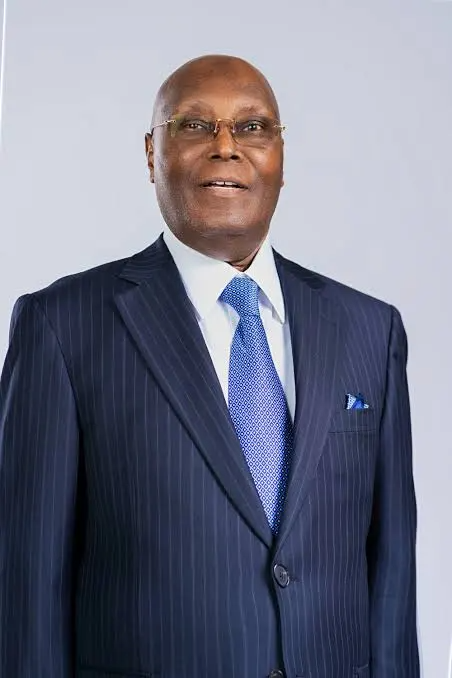
Atiku Abubakar
Former Vice-President, Atiku Abubakar and Presidential candidate of the African Democratic Congress (ADC), has urged President Bola Tinubu to take steps to reduce the price of petrol and ease the economic hardship being faced by Nigerians while proposing a transparent production subsidy for petroleum products refined in Nigeria to reduce pump prices.
Atiku, while addressing news conference on Friday in Abuja, said the subsidy, if implemented, would apply exclusively to petroleum products refined locally and sold to Nigerians, excluding imported petroleum products.
He said the subsidy would be operated within a fixed spending limit, subject to National Assembly approval and independent audits to ensure transparency and accountability.
According to him, the intervention would reduce fuel price, stimulate domestic refining, create jobs and improve Nigerians’ purchasing power amid raising costs of living.
“If elected, from May 29, 2027, I will introduce a transparent production subsidy for petroleum products refined in Nigeria and sold to Nigerians.
“Think of a Nigerian rice miller. Government helps lower the cost of milling so the rice can sell for less. More families can afford it.
“As sales grow, the miller buys more rice from Nigerian farmers and employs more Nigerians to process, package and transport it.
“That means cheaper rice for families, more business for farmers and more jobs for Nigerians. Our production subsidy will work the same way.
“Government support must bring prices down. Only products confirmed to be refined in Nigeria will qualify. Imported products will not,” he said.
Atiku urged the President Bola Tinubu to adopt measures that would provide immediate relief to Nigerians to ease the hardship.
He said the removal of petrol subsidy had increased the costs of transportation, food, production and logistics, placing additional pressure on households, workers, farmers and businesses.
The former vice-president said government intervention should focus on reducing the underlying cost of energy rather than relying solely on palliatives to cushion hardship.
He maintained that Nigerians needed practical economic measures capable of lowering costs and improving household welfare, rather than temporary relief that failed to address underlying pressures.
Atiku urged the president to adopt the proposed framework regardless of its origin, saying that priority should be placed on reducing the burden on Nigerians.
“If responsible intervention can lower prices, intervene, if changing course can help Nigerian families, change course,” Atiku said.
Atiku’s address reads:
Fellow Nigerians,
Since May 29, 2023, Nigerians have lived with the consequences of the removal of petrol subsidy without adequate protection for families, workers, farmers and businesses during the transition.
For more than three years, that burden has travelled from the petrol station to the bus stop, from the bus stop to the market, and from the market to the family dining table.
When petrol becomes expensive, transportation becomes expensive. When transportation becomes expensive, food becomes expensive. Farmers pay more to move produce. Traders pay more to stock their shops. Workers pay more to get to work. Businesses pay more for logistics and energy.
In the end, the Nigerian family receives the bill.
When government makes energy expensive, it makes life expensive.
This is no longer an argument between economists. It is the daily reality of millions of Nigerians.
These are the real tests of an economic policy.
When I first argued that government should review its approach to the withdrawal of petrol subsidy and consider responsible intervention to bring down the cost of fuel, Mr. Bola Tinubu dismissed my proposal as demonstrating “serious ignorance” of governance and the economy.
My dear Bola, events since then have raised a simple question.
Is the Nigeria Labour Congress also ignorant when it calls for urgent intervention to cushion workers from rising petrol prices?
Are petroleum marketers ignorant when they call for policies that strengthen domestic refining and help moderate pump prices?
Are Nigerian manufacturers ignorant when they warn that power-related expenses now consume more than half of operating costs?
And are the millions of Nigerians crying out because they can no longer afford transportation, food and other basic necessities also ignorant?
When workers, producers, marketers and ordinary families are all raising the alarm, government must listen.
If everybody who questions your policy is ignorant, while only the President is presumed to be wise, then we have a leadership problem on our hands.
Leadership requires the humility to confront the consequences of policy and the courage to change course.
Across our factories, production costs are rising while unsold goods pile up in warehouses. Manufacturers struggle to keep producing; families struggle to afford what they produce.
The goods are there. The need is there. What is missing is the purchasing power.
Government celebrates GDP growth, higher revenues and bigger allocations. But Nigerians judge the economy by what their money can buy.
If government receives more naira while the citizen’s naira buys less food, less fuel, less electricity and less transportation, then bigger government revenues mean little to the family struggling to survive.
Economic growth must enter the home.
It must enter the market basket.
It must show up in the purchasing power of the worker.
A government collecting more money while its citizens can afford less cannot declare victory on the strength of bigger numbers alone.
Reform must ultimately be judged by what it does to the lives of the people. It should expand production, create opportunity and improve living standards. It cannot become an endless explanation for hardship.
That is why I am calling on Mr. Bola Tinubu to act now.
He has approximately eight months remaining in office.
Bola, I want you to use those 8months to give Nigerians relief.
And let me say this plainly:
Bola Tinubu should not be ashamed to do what is necessary to lower the price of petrol simply because Atiku Abubakar proposed a government intervention.
He should just take the idea.
Rename it if he wishes, and even take the credit.
What matters to me is that, Nigerians pay less.
A sensible idea does not become a bad idea because it came from your opponent.
If responsible intervention can lower prices, intervene.
If changing course can help Nigerian families, change course.
And Nigerians do not need another elaborate palliative ceremony.
Do not make life unbearable and then distribute bags of rice as evidence of compassion.
Do not break a man’s legs, hand him crutches and demand applause for providing mobility.
Emergency assistance has its place, but palliatives cannot substitute for sound economic policy.
A bag of rice cannot repair an economy in which transportation costs outrun salaries.
A cash transfer cannot permanently compensate a worker whose income is continuously eroded by energy costs.
Palliatives manage pain. Good policy addresses the source of the pain.
And as if the pressure on families were not enough, Nigerians are now being told that electricity subsidies will be phased out from 2027.
Electricity is already expensive.
Families are calculating how long their units will last.
Small businesses are struggling to keep the lights on.
Manufacturers are spending enormous amounts on electricity, diesel and alternative power simply to keep factories running.
How much more can the Nigerian family carry?
The barber needs electricity for his clippers.
The tailor needs it for her machines.
The frozen-food seller needs it to preserve her stock.
The welder needs it for his equipment.
The manufacturer needs it to keep the factory alive.
The lesson of petrol must not be repeated with electricity.
Do not remove first and think later. Do not impose the pain first and search for palliatives afterwards.
When energy becomes unaffordable, everything becomes unaffordable.
The President should know that, eight months may sound short inside Aso Rock.
But eight months is a very long time when you are living from hand to mouth.
Use that time to reduce the burden on Nigerians.
And if your government requires policy ideas or technical input on how to bring relief, I am prepared to make mine available.
Nigerians do not have to wait for another administration before they benefit from an idea that can help them today.
If you need the framework, I will provide it.
Implement it under your government.
Give it whatever name you choose.
Take the credit.
I ask for only one thing:
Let Nigerians breathe.
I am prepared to compete with you politically. But I will never compete with the welfare of the Nigerian people.
The presidency may be contested. The wellbeing of Nigerians should never be.
If elected, from May 29, 2027, I will introduce a transparent production subsidy for petroleum products refined in Nigeria and sold to Nigerians.
Think of a Nigerian rice miller. Government helps lower the cost of milling so the rice can sell for less. More families can afford it. As sales grow, the miller buys more rice from Nigerian farmers and employs more Nigerians to process, package and transport it.
That means cheaper rice for families, more business for farmers and more jobs for Nigerians.
Our production subsidy will work the same way: government support must bring prices down. Only products confirmed to be refined in Nigeria will qualify. Imported products will not.
The programme will have a fixed spending limit, National Assembly approval and independent audits.
For the remaining eight months, President Tinubu should use every responsible instrument available to reduce the burden on Nigerians.
Bola Tinubu should not be ashamed to do it because Atiku Abubakar proposed it.
And if elected, I will work to build an economy in which growth is not merely announced in Abuja but felt in Nigerian homes.
An economy where more production means more jobs.
Where more revenue means better lives.
Where economic growth means greater purchasing power.
And where the Nigerian family can once again afford the basic necessities of life.
Because ultimately, Nigerians do not live on statistics.
They live on what their hard-earned money can buy.